
Collagen Supplements: Holy Grail or Marketing Gimmick?
Collagen supplements are everywhere. Powders for your morning coffee, gummies for glowing skin and drinks promising to turn back the clock. The packaging looks expensive, the marketing is convincing and everyone seems to have a discount code.
But are they actually doing anything for your skin?
My honest answer is that there is some promising research, but the claims often go much further than the evidence. I wouldn’t call collagen supplements completely useless. I also wouldn’t put them at the centre of your skincare routine.
Getting into your bloodstream is only part of the story
When I discussed this on TikTok, people were quick to point out that small collagen fragments can be absorbed into the bloodstream. They’re right. Certain fragments, called peptides, have been detected in the blood after people take oral collagen.1
But being absorbed doesn’t automatically mean a supplement will noticeably improve your skin. Those are two different questions, and the marketing tends to skip over the gap between them.
Your body doesn’t simply send the collagen from your morning smoothie straight to the lines around your eyes. Digestion breaks it down, and what happens next is more complicated than topping up a collagen tank.
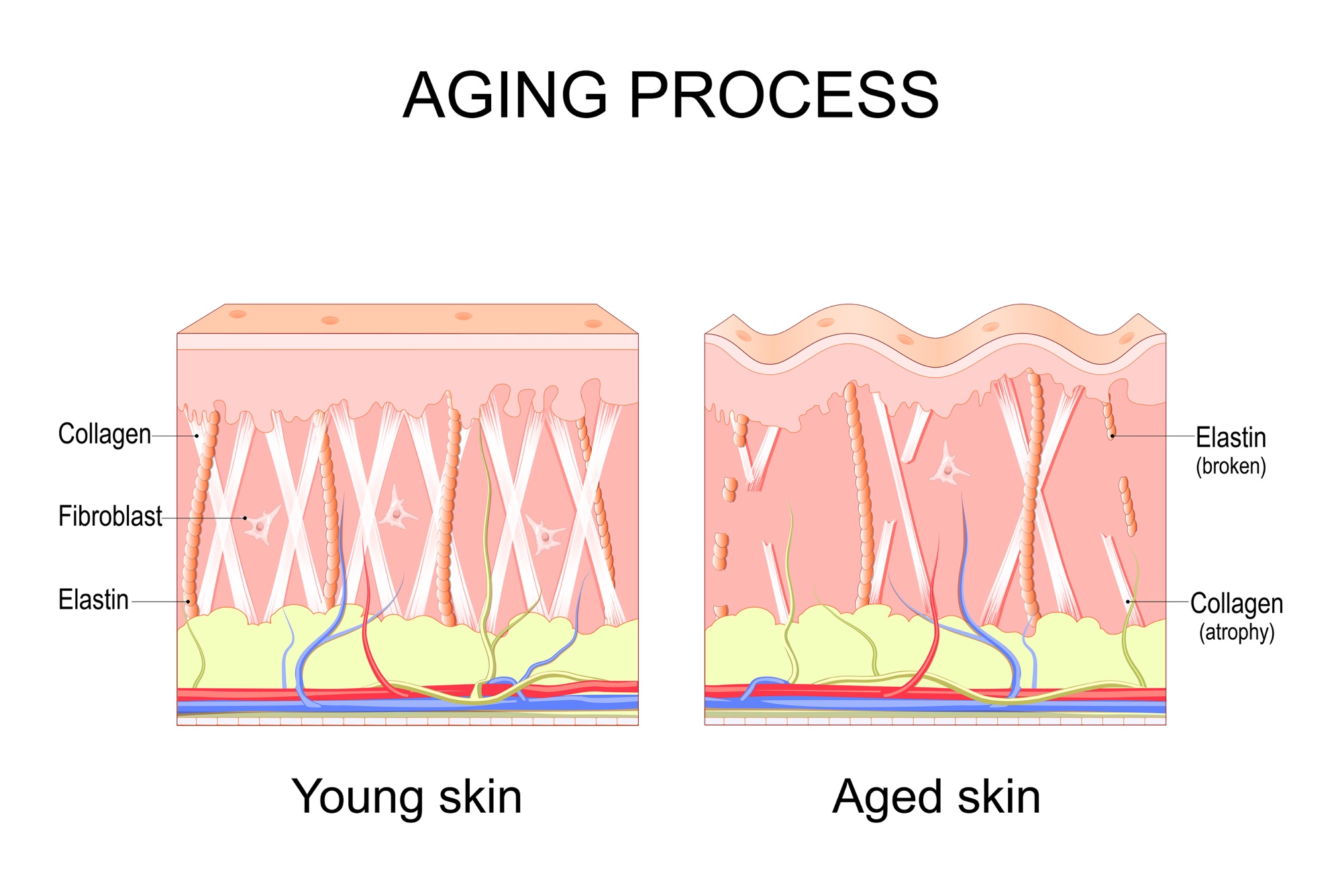
There is a plausible reason these supplements might help. Laboratory studies suggest certain collagen peptides can influence fibroblasts, the cells involved in making and maintaining the skin’s supporting structure. So describing them as nothing more than building blocks would be oversimplifying things. But a response in cells in a laboratory is not the same as a visible result in the mirror.2
What does the research actually show?
Some studies have reported improvements in skin hydration, elasticity and wrinkles. That deserves consideration. It doesn’t mean every collagen powder on the shelf delivers those results.
A 2025 review brought together 23 randomised trials involving 1,474 people. Overall, the results suggested benefits. However, when the researchers looked separately at higher-quality studies, they found no significant benefit. Studies without pharmaceutical-company funding also showed no benefit.3
That doesn’t prove every positive result is wrong. Industry funding doesn’t automatically invalidate a study. It does mean we should be cautious about treating the benefits as established.
For me, the question is whether the evidence is convincing enough to recommend that someone spend money on a supplement month after month. At this stage, I’m not convinced it should be a priority.
Where would I put my effort?
Before adding another product, I would look at what you’re already doing consistently. Daily sun protection is a good example. A randomised trial found less skin ageing in people using sunscreen daily than in those using it at their own discretion. It might be less exciting than a new beauty supplement, but it deserves the attention.4
I also wouldn’t make collagen supplements a compulsory extra alongside a clinic treatment. Saying they improve the results of laser or skin needling is a separate claim that needs its own evidence. You shouldn’t feel you have to buy a tub of powder to get the most out of your appointment.
If you enjoy taking collagen and the cost is comfortable, I understand the appeal. Just keep your expectations realistic. And if you haven’t noticed a difference, you don’t need to keep buying it because someone online insists you should.
So, holy grail or marketing gimmick?
The science is interesting. The marketing is ahead of it.
There may be benefits for some people, but we still need stronger evidence to understand how noticeable and reliable those benefits are, and which products actually deliver them.
My approach is simple: I want you to understand what you’re paying for. A collagen supplement is an optional purchase with uncertain skin benefits. You can have a thoughtful skincare routine without one.
References
1. Iwai K, Hasegawa T, Taguchi Y, et al. Identification of food-derived collagen peptides in human blood after oral ingestion of gelatin hydrolysates. J Agric Food Chem. 2005;53(16):6531–6. doi:10.1021/jf050206p
2. Ohara H, Ichikawa S, Matsumoto H, et al. Collagen-derived dipeptide, proline-hydroxyproline, stimulates cell proliferation and hyaluronic acid synthesis in cultured human dermal fibroblasts. J Dermatol. 2010;37(4):330–8. doi:10.1111/j.1346-8138.2010.00827.x Laboratory study; first author from Meiji Seika Kaisha, which makes collagen supplements.
3. Myung SK, Park Y. Effects of collagen supplements on skin aging: a systematic review and meta-analysis of randomized controlled trials. Am J Med. 2025;138(9):1264–77. doi:10.1016/j.amjmed.2025.04.034
4. Hughes MCB, Williams GM, Baker P, Green AC. Sunscreen and prevention of skin aging: a randomized trial. Ann Intern Med. 2013;158(11):781–90. doi:10.7326/0003-4819-158-11-201306040-00002
Written by Dr Brandon Kober-Brown MBBS, ProfDipMensHlth, GCCM
Registered Medical Practitioner (General Registration) MED0002581903
Disclaimer: This article is intended for general educational purposes only and should not be taken as personal medical advice. It is not a substitute for a consultation with a registered medical practitioner. Whether a supplement suits you depends on your health and any medicines you take, and should be discussed with an appropriately qualified practitioner.
