
Hyperhidrosis clinic · Potts Point, Sydney
Hyperhidrosis Treatment
Excessive sweating, taken seriously.
Sweat marks by mid-morning. A quick wipe of the palm before every handshake. A wardrobe chosen for what won’t show it. Hyperhidrosis is a medical condition, not a hygiene problem, and there’s more that can help than another antiperspirant. At Cleon in Potts Point, Sydney, it starts with a consultation with Dr Brandon.
- First step
- A consultation
- Led by
- A doctor
- Most common area
- Underarms
- Usually starts
- Before age 25
- Best time to come in
- Before summer
Prescription and in-clinic options are only offered after a medical consultation, where they’re clinically appropriate.
What is hyperhidrosis
What is hyperhidrosis, and why does it happen?
Hyperhidrosis means sweating more than your body needs to stay cool. Not after a run, or on a 35-degree day. In a cool room, sitting still. It’s a recognised medical condition. It’s common, affecting around 1 in 20 people. And it’s rarely talked about. There are two kinds, and telling them apart is the first job.
-
Primary hyperhidrosis
The most common
Normal sweat glands, switched on too often by overactive nerves. Usually one or two areas, both sides equally. It tends to start young, often runs in families, and stops while you sleep.
-
Secondary hyperhidrosis
Has a cause
Sweating driven by something else: a medicine, an overactive thyroid, low blood sugar, menopause or an infection. It’s more often all over, starts later in life, and can happen at night. Find the cause and you often find the answer.
-
The triggers
Or none at all
Heat, stress, exercise and spicy food all make it worse. With hyperhidrosis, it also happens without them. Worrying about sweating can set it off too, which is why it can feel impossible to control.
Where it shows
Which areas does hyperhidrosis affect?
Most people have one or two. Where you sweat shapes which options make sense for you.
Underarm sweating
Axillary hyperhidrosis, the most common kind. Marks through shirts, stained fabrics, and arms kept close to your sides.
Sweaty hands
Palmar hyperhidrosis. Damp palms that smudge paper, slip on a phone screen and make a handshake something to dread.
Sweaty feet
Plantar hyperhidrosis. Sliding in sandals, damp socks by lunch, and a higher risk of skin infection and odour.
Face & scalp
Craniofacial hyperhidrosis. A damp hairline and beads across the forehead, often set off by heat, food or a room full of people.
Groin & skin folds
Under the breasts, the groin, the lower back. Less talked about, and just as worth raising.
All over
Generalised sweating, across the whole body or at night, is more likely to have a cause. That’s where we start.
The options
How is excessive sweating treated?
There’s no single fix. The right plan depends on where you sweat, how much it affects you, and whether something is driving it. Most people have tried a stronger antiperspirant. Fewer know what comes next. No treatment agenda. Just an honest conversation about your options.
The cause, checked first
If a medicine, your thyroid or a hormonal change is driving the sweating, that’s treated first. Sometimes it’s the whole answer.
Antiperspirants, used properly
Clinical-strength products work best applied at night, to completely dry skin. Many people were never shown how, or stopped because of the itch. Both are fixable.
Iontophoresis for hands & feet
A device that passes a mild current through tap water while your hands or feet rest in it. Used regularly, it helps many people. You’ll be told if it’s worth trying.
In-clinic & prescription options
When topical products aren’t enough, there are in-clinic and prescription options, offered only after a medical assessment. Dr Brandon will explain how each works and whether one suits you.
Everyday changes
Breathable fabrics, moisture-wicking socks, rotating your shoes, an undershirt for big days. Small things that make the day easier.
Referral, when it’s right
If you need a dermatologist, an endocrinologist or a surgeon, you’ll be told, and referred. Surgery is a last resort, and it can cause sweating elsewhere.
A doctor-led clinic
Why see a doctor about sweating?
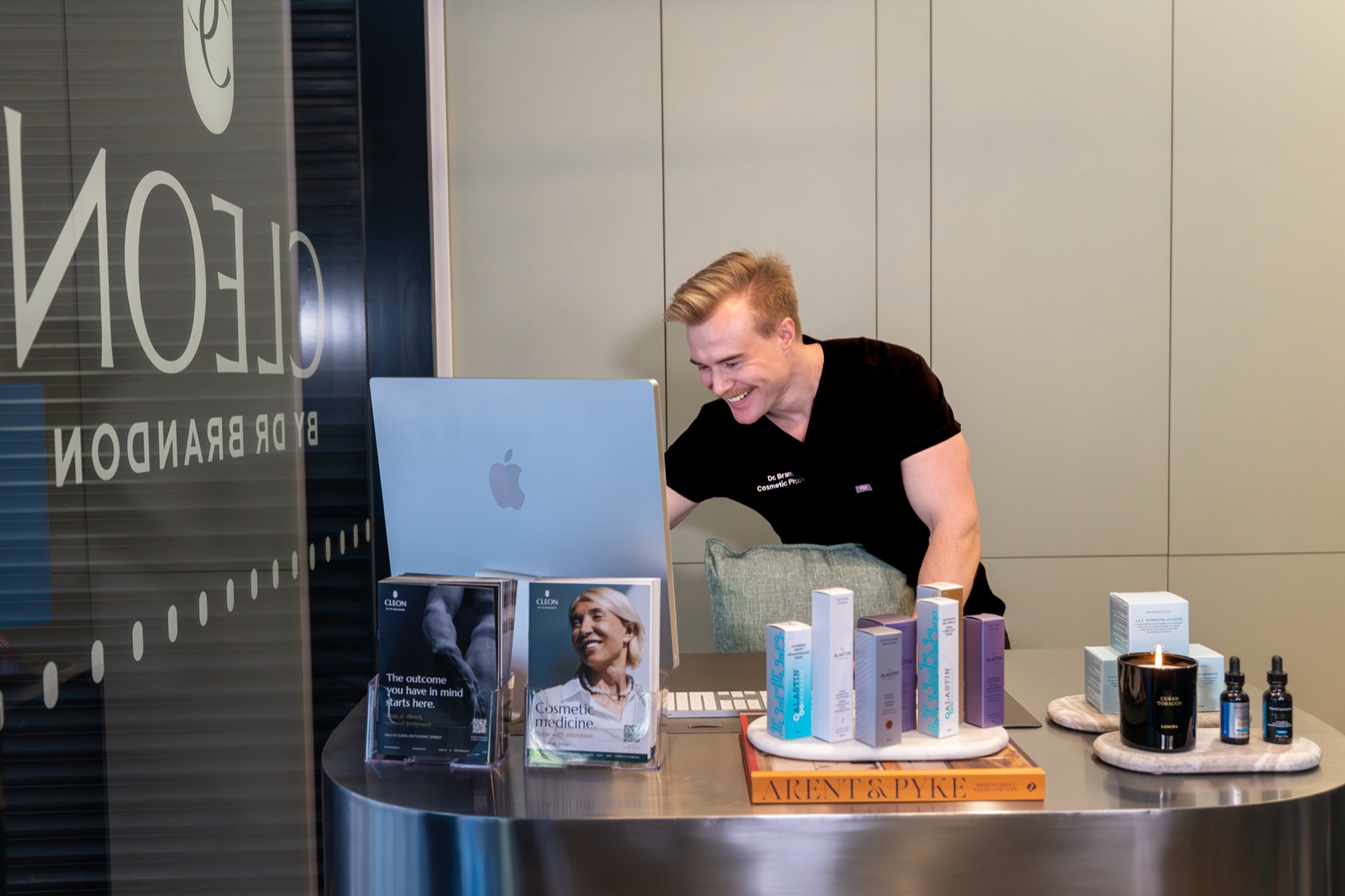
Most people with hyperhidrosis have been told to try a stronger deodorant, and left it there. A doctor can do more. Check whether something is causing it. Grade how much it affects your life. Match the options to the area and the severity. Cause-led, not dose-led.
At Cleon in Potts Point, Dr Brandon assesses you and sets the plan. Any treatment is performed by our clinical team under his medical supervision, in a doctor-led clinic. Results are monitored, not assumed.
Is this right for me?
Am I suited to a hyperhidrosis consultation?
This might suit you if
- You sweat through clothes, or drip, without heat or exercise
- It affects your work, your relationships or what you choose to wear
- Clinical-strength antiperspirants haven’t been enough
- It started young, sits in one or two areas, and stops when you sleep
Worth discussing in consultation first
- Sweating that started recently, later in life, or all over your body
- Night sweats, unexplained weight loss or fever. These need checking before anything else
- You’re pregnant, planning pregnancy or breastfeeding, or have a neuromuscular condition
- You’re hoping for a cure. Most options manage sweating rather than end it, and results vary between people
What to expect
How does a hyperhidrosis consultation work?
The conversation comes first. Come as you are. No one here will be surprised by a sweat mark.
-
Talk
Dr Brandon asks where you sweat, when it started, what sets it off and what you’ve tried. And what it costs you, day to day.
-
Assess
He examines you, grades the severity and checks for anything that could be causing it. If tests are needed, he’ll arrange them.
-
Plan
You’ll hear which options suit you, what to expect and what it costs. If a treatment is right, our clinical team carries it out under his medical supervision. If it isn’t, he’ll say so.
Frequently asked
Hyperhidrosis treatment in Sydney: your questions
Hyperhidrosis is part of our Corrective & Medical care. Anything else, ask at your consultation or email hello@cleonclinic.com.
What causes hyperhidrosis?
In primary hyperhidrosis, the nerves that switch on your sweat glands are overactive. The glands themselves are normal, and it often runs in families. Secondary hyperhidrosis has an underlying cause, such as a medicine, an overactive thyroid, low blood sugar, menopause or an infection.
How do I know if my sweating is excessive?
If it soaks through clothes, drips, or gets in the way of work, sport or relationships, and it happens without heat or exercise, it’s worth getting checked. Doctors grade it on a simple four-point scale. A score of 3 or 4 is considered severe.
Why don’t normal antiperspirants work for me?
Everyday antiperspirants are made for everyday sweating. Clinical-strength products do more, but only when they’re used properly: applied at night, to completely dry skin, when your sweat glands are quietest. Many people stop because of irritation, which can usually be managed.
What treatment options are there for excessive sweating?
Clinical-strength antiperspirants, iontophoresis for hands and feet, in-clinic and prescription options, and treating any underlying cause. Which suit you depends on the area, the severity and your health. That’s what your consultation covers.
What helps sweaty hands and feet?
Clinical-strength antiperspirants are the usual first step. Iontophoresis, a device that passes a mild current through tap water, helps many people with palmar and plantar hyperhidrosis. In-clinic and prescription options are discussed in consultation where they’re appropriate.
Can hyperhidrosis be cured?
Primary hyperhidrosis usually can’t be cured, but it can often be well controlled. Most options need to be kept up to keep working, and how well they work varies from person to person.
Can stress or anxiety cause excessive sweating?
Stress makes most sweating worse, and worrying about sweat can set it off. But hyperhidrosis isn’t an anxiety disorder. In primary hyperhidrosis the sweating happens without a trigger, and getting it under control can take the worry with it.
Should I worry about sweating at night?
It’s worth checking. Primary hyperhidrosis usually stops while you sleep. Night sweats, especially with fever, weight loss or feeling unwell, need to be looked into before anything else.
Are there risks or side effects?
Every treatment carries risks and possible side effects. These are explained in full before you decide anything. Some options don’t suit everyone. Dr Brandon will tell you honestly whether one is right for you.
How much does hyperhidrosis treatment cost?
It depends on the area and the option. Pricing is confirmed in your consultation, before anything goes ahead. No treatment agenda.
Do I need a referral to see a doctor about sweating?
No. You can book a consultation directly. If you need a specialist, such as a dermatologist or an endocrinologist, Dr Brandon will refer you.
Is there a hyperhidrosis clinic near me in Sydney?
Cleon by Dr Brandon is in Potts Point, a short walk from Kings Cross station and easy to reach from the city and the eastern suburbs. We see excessive sweating of the underarms, hands, feet, face and body, face to face in clinic.
When is the best time to come in?
Before summer is ideal, so a plan is in place before the heat arrives. But if sweating is affecting you now, it’s worth talking to us at any point.
How do I get started?
Book a consultation. It’s the first step, and the only one you need to take today. Not sure where to start? That’s what the consultation is for.
Book a consultation
Sweating shouldn’t decide what you wear.
Face to face at our Potts Point clinic, a short walk from Kings Cross station. Your plan is set with Dr Brandon, and nothing happens without your agreement.
