

TMJ & jaw clinic · Potts Point, Sydney
TMJ & Jaw Clenching Treatment
Your jaw works hard. Sometimes too hard.
Waking with a sore jaw. A click every time you yawn. Headaches that start at the temples. Teeth worn flat by grinding you never hear. TMJ disorders (TMD), jaw clenching and teeth grinding (bruxism) are common, and they rarely have a single cause. At Cleon in Potts Point, Sydney, it starts with a consultation with Dr Brandon, working alongside your dentist.

- First step
- A consultation
- Led by
- A doctor
- We assess
- Joint & muscle
- Works with
- Your dentist
- Referrals
- Welcome
Prescription and in-clinic options are only offered after a medical consultation, where they’re clinically appropriate.
Understanding your jaw
What’s the difference between TMJ, clenching and masseter hypertrophy?
Three different things get called “TMJ”: the joint, the habit that overworks it, and the muscle that grows from the work. They often travel together. Telling them apart is the first job.
TMJ disorder (TMD) is a problem with the jaw joint and the muscles that move it. Bruxism is the habit of clenching or grinding that overworks them. Masseter hypertrophy is the chewing muscle, enlarged by that work. One person can have all three, and the plan depends on which you have.
-
TMJ disorder
The joint
Your temporomandibular joints hinge your lower jaw to your skull, one in front of each ear. A TMJ disorder, or TMD, is a problem with those joints and the muscles that move them: pain, clicking, locking, or a jaw that won’t open wide. Signs are found in around 1 in 3 adults, though far fewer live with ongoing pain, and women are affected about twice as often as men.
-
Clenching & grinding
The habit
Doctors call it bruxism: clenching, grinding or bracing the jaw. Awake, it’s mostly clenching, often under stress or deep in concentration, and around 1 in 4 adults do it. Asleep, it’s more often grinding, linked with snoring and sleep apnoea, alcohol, caffeine, smoking and some antidepressants. It’s a behaviour, not a disease. It matters when it causes pain or damage.
-
Masseter hypertrophy
The muscle
The masseter is the chewing muscle at the angle of your jaw. Work it hard enough, for long enough, and it can enlarge, on one side or both. It shows as a firm fullness at the jaw angle that can make the lower face look wider. People who clench or grind are far more likely to have it.
The signs
What are the signs of TMJ and jaw clenching?
Most people have more than one. Some notice the pain first. Others hear about it from their dentist, or from whoever sleeps beside them.
Jaw pain & tightness
An ache in front of the ear or along the jaw, often worse after chewing or first thing in the morning. It can spread to the temple or down into the neck.
Clicking, popping & locking
A painless click on opening is common, and rarely a sign of damage. A jaw that catches, locks, or won’t open as wide as it used to is worth a look.
Headaches at the temples
Tension that sits at the sides of the head, where the temporalis muscle does its work.
Ear pain & fullness
Earache, fullness or ringing, with ears that check out normal. The joint sits right in front of the ear canal.
Worn or cracked teeth
Flattened edges, chips, sensitivity and broken fillings. Often your dentist notices before you do.
A wider, square jaw
Masseter hypertrophy: enlarged jaw muscles that make the lower face look wider or more square, on one side or both.
The options
How are TMJ and jaw clenching treated?
There’s no single fix, and most people need more than one thing. The best-supported treatments are also the simplest: understanding what’s happening, jaw exercises, physiotherapy and changing the habit. No treatment agenda. Just an honest conversation about your options.
The cause, checked first
Is it the joint, the muscle, your sleep or a medicine? Ear, sinus, dental and nerve problems can all mimic TMJ, and some need treating first.
Your dentist: teeth & splints
A splint protects your teeth from grinding. It doesn’t stop the grinding, and the evidence that it eases long-term jaw pain is limited. Teeth, splints and bite stay with your dentist. We work alongside them.
Physiotherapy & jaw exercises
Guided jaw exercises, stretching, posture work and hands-on therapy have the strongest evidence for long-term jaw pain. We’ll refer you to a physio who knows jaws, or work with yours.
Habit, stress & sleep
Lips together, teeth apart. Noticing the clench is half the battle. Cognitive behavioural therapy helps, and so can less caffeine and alcohol, and checking for sleep apnoea.
In-clinic & prescription options
For jaw muscles that are overactive or enlarged, there are in-clinic and prescription options, offered only after a medical assessment. They work on the muscle, not the joint, and for long-term jaw pain they aren’t first line. Dr Brandon will explain how each works and whether one suits you.
Referral, when it’s right
Imaging, a maxillofacial surgeon, a sleep physician or a pain team. If you need one, you’ll be told, and referred. Surgery is rarely needed.
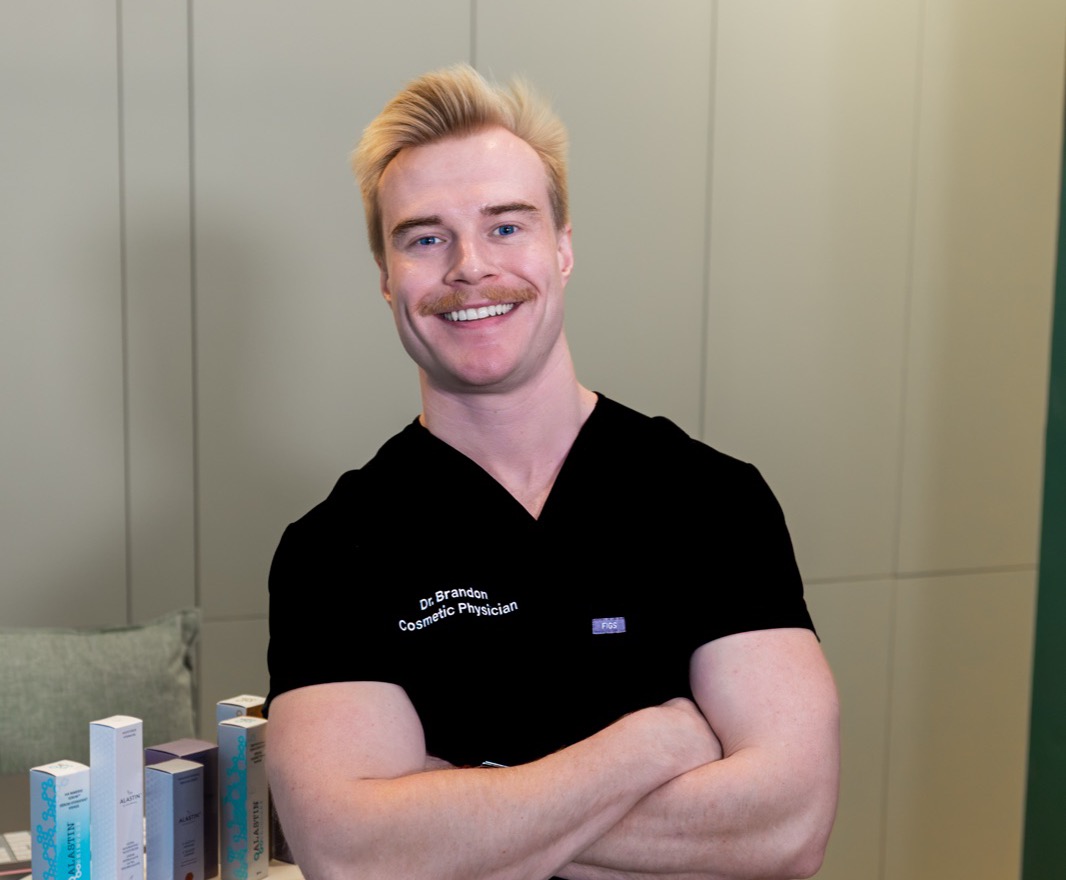
A doctor-led clinic
Why see a doctor about your jaw?
Jaw problems sit between dentistry, medicine and physiotherapy, and people often bounce between all three. A doctor can bring them together. Check for the conditions that mimic TMJ. Review your sleep and your medicines. Manage the muscle, and work with your dentist on the teeth. Cause‑led, not dose‑led.
At Cleon in Potts Point, Dr Brandon assesses you and sets the plan. Any treatment is performed by our clinical team under his medical supervision, in a doctor-led clinic. Results are monitored, not assumed.
For referrers
Referring a patient with jaw clenching or TMJ?
We work alongside dentists, orthodontists, GPs and physiotherapists. Shared care, not a handover. Your patient stays yours, and you hear back from us.
Dentists & orthodontists
Patients who clench through their splint, or have masseter pain or enlargement, tooth wear, cracked teeth or failing restorations. We look after the muscle side. Teeth, splints and bite stay with you.
GPs
Jaw pain, temple headaches or facial pain where a jaw cause is likely. We examine the joint and muscles, look for the conditions that mimic TMJ, and refer on when something else is going on.
Physiotherapists
Clenching that keeps undoing your work. We manage the habit and the overactive muscle, and send your patient back to you for jaw and neck rehabilitation.
How to refer
- Email a referral letter, or call us
- Include the concern, how long it’s been going on, any splint or physio history, and relevant imaging or dental findings
- We contact your patient to book a face-to-face consultation in Potts Point
- Dr Brandon writes back with his findings and the plan
Phone0438 163 638
Is this right for me?
Am I suited to a TMJ and jaw clenching consultation?
This might suit you if
- You wake with a sore jaw, tight cheeks or a headache at the temples
- Your dentist has seen wear, cracks or broken fillings from grinding
- You clench through the day, or through your splint at night
- Your lower face has become wider or more square over time
Worth discussing in consultation first
- A jaw that has locked, or suddenly can’t open or close fully
- Over 50 with a new temple headache and jaw pain when chewing, or numbness, a lump, fever or weight loss. See your GP promptly: these need checking before anything else
- You’re pregnant, planning pregnancy or breastfeeding, or have a neuromuscular condition
- You’re hoping for a cure. Most options manage clenching rather than end it, and results vary between people
What to expect
How does a TMJ consultation work?
The conversation comes first. Bring your splint, and any letters or scans from your dentist or physio.
-
Talk
Dr Brandon asks where it hurts, when it started, how you sleep, what you’ve tried, and what your dentist or physio has found.
-
Examine
He checks the joints, the jaw muscles and how far and smoothly you open, looks for signs of grinding, and rules out the conditions that mimic TMJ.
-
Plan
You’ll hear what’s driving it, which options suit you and what they cost. If a treatment is right, our clinical team carries it out under his medical supervision. With your permission, your dentist and physio stay in the loop.
Frequently asked
TMJ and jaw clenching in Sydney: your questions
TMJ care is part of our Corrective & Medical services. Anything else, ask at your consultation or email hello@cleonclinic.com.
What is TMJ disorder?
Your temporomandibular joints, or TMJs, connect your lower jaw to your skull, just in front of each ear. A TMJ disorder, or TMD, is the name for a group of problems with those joints and the muscles that move them. It can cause pain, clicking, locking or difficulty opening wide.
Is TMJ the same as TMD?
People use the two interchangeably. Strictly, TMJ is the joint and TMD is the disorder. When someone says they have “TMJ”, they usually mean TMD.
What causes jaw clenching and teeth grinding?
Usually several things at once. Clenching during the day is linked with stress, concentration and anxiety. Grinding in your sleep is linked with snoring and sleep apnoea, alcohol, caffeine, smoking and some antidepressants. Finding your triggers is part of the consultation.
Is clenching the same as grinding?
Both are bruxism: repeated jaw-muscle activity that clenches or grinds the teeth, or braces the jaw. Awake bruxism is mostly clenching and bracing. Sleep bruxism is more often grinding. In otherwise healthy people it’s seen as a behaviour rather than a disease. It matters when it causes pain, wear or damage.
What is masseter hypertrophy?
The masseter is the large chewing muscle at the angle of your jaw. Masseter hypertrophy means it has enlarged, on one side or both. It shows as a firm fullness at the jaw angle that can make the lower face look wider, and it’s strongly linked with clenching and grinding.
Can clenching make my jaw look wider?
It can. A muscle that works hard for long enough can grow, and people who clench or grind are far more likely to have an enlarged masseter. A swelling at the jaw angle can have other causes, such as a salivary gland or dental problem, so it’s examined properly first.
Can enlarged jaw muscles go back to normal?
Often, at least partly. Like any muscle, the masseter shrinks when it’s worked less, so easing the clenching is the first step, and it takes months rather than weeks. How much it changes varies between people. Where muscle bulk is the main concern, in-clinic options are discussed after a medical assessment.
My jaw clicks. Is that a problem?
Not usually. A painless click when you open is common and rarely a sign of damage. It’s worth checking if it hurts, if your jaw catches or locks, or if you can’t open as wide as you used to.
Can jaw clenching cause headaches or ear pain?
Yes. TMJ problems can cause headaches at the temples, and pain, fullness or ringing in the ear when the ear itself is healthy. Your ears and other causes of headache are checked before the jaw takes the blame.
Will a night guard stop me grinding?
A splint, or night guard, from your dentist protects your teeth. It doesn’t stop the grinding itself, and the evidence that it eases long-term jaw pain is limited. It’s still worth having if you grind. It just isn’t usually the whole answer.
How do I stop clenching my jaw?
Start by noticing it. Set a few reminders through the day and check: lips together, teeth apart, tongue resting on the roof of your mouth. Cut back on caffeine and alcohol, especially in the evening, and look at how you sleep. Gentle jaw stretches and a physio who knows jaws help many people. If it keeps coming back, or your jaw hurts, that’s when a consultation earns its place.
Should I see a dentist or a doctor for jaw pain?
Often both. Your dentist looks after your teeth, bite and splint. A doctor checks for medical causes, reviews your sleep and medicines, and can offer options a dentist doesn’t. At Cleon we work alongside your dentist, not instead of them.
Do I need to see a TMJ specialist?
Usually not at first. Most jaw pain and clenching is managed by a dentist, a doctor and a physiotherapist working together, with self-care and exercises doing much of the work. Specialists in oral medicine, maxillofacial surgery or pain medicine are for the few who need imaging, surgery or complex pain care. Dr Brandon is a doctor, not a specialist. He assesses you, sets the plan and refers you on if a specialist is the right call.
Can stress cause jaw clenching?
Daytime clenching is closely linked with stress and anxiety. Noticing the clench is the first step: lips together, teeth apart, tongue resting on the roof of your mouth. Psychological approaches such as cognitive behavioural therapy have good evidence for long-term jaw pain.
Can medicines cause teeth grinding?
Some can. Certain antidepressants have been linked to grinding and jaw pain, usually starting within a few weeks of beginning the medicine. Never stop a medicine on your own. Dr Brandon can talk it through with you and your prescriber.
When is jaw pain more serious?
See a doctor promptly if you’re over 50 with a new headache at the temple and jaw pain when chewing, or if you have numbness, a lump or swelling, fever, unexplained weight loss, a change in your hearing, or a bite that has suddenly changed. These can mimic TMJ problems and need checking first.
What treatment options are there for TMJ and jaw clenching?
Explanation and self-care, jaw exercises and physiotherapy, psychological approaches, a splint from your dentist to protect your teeth, dealing with sleep or medicine triggers, and in-clinic and prescription options for overactive jaw muscles. For long-term jaw pain, the best-supported options are the simplest ones. Which suit you is what the consultation covers.
Can TMJ be treated without surgery?
Almost always. Surgery is reserved for a small number of specific joint problems, and it’s never the starting point. Explanation, jaw exercises, physiotherapy, managing the clenching habit and treating sleep or medicine triggers come first, and for most people that’s enough.
How much does TMJ treatment cost?
It depends on what’s driving it and which options suit you. Pricing is confirmed in your consultation, before anything goes ahead. No treatment agenda.
Do I need a referral?
No. You can book a consultation directly. Referrals from dentists, GPs and physiotherapists are welcome, and help us see the whole picture.
I’m a dentist. How do I refer a patient?
Email a referral letter to hello@cleonclinic.com or call 0438 163 638. Include the concern, any splint or treatment history, and relevant imaging or dental findings. We’ll contact your patient to book, and Dr Brandon will write back with his findings and the plan.
Is there a TMJ clinic near me in Sydney?
Cleon by Dr Brandon is at 46a Macleay Street, Potts Point, a short walk from Kings Cross station and easy to reach from the city, Darlinghurst, Elizabeth Bay and the eastern suburbs. We see jaw pain, clenching, grinding and masseter hypertrophy face to face in clinic.
How do I get started?
Book a consultation. It’s the first step, and the only one you need to take today. Not sure where to start? That’s what the consultation is for.
Book a consultation
Give your jaw a rest.
Face to face at our Potts Point clinic, a short walk from Kings Cross station. Your plan is set with Dr Brandon, and nothing happens without your agreement.
