
PRP clinic · Potts Point, Sydney
PRP Treatment for Hair & Skin
Not all PRP is the same.
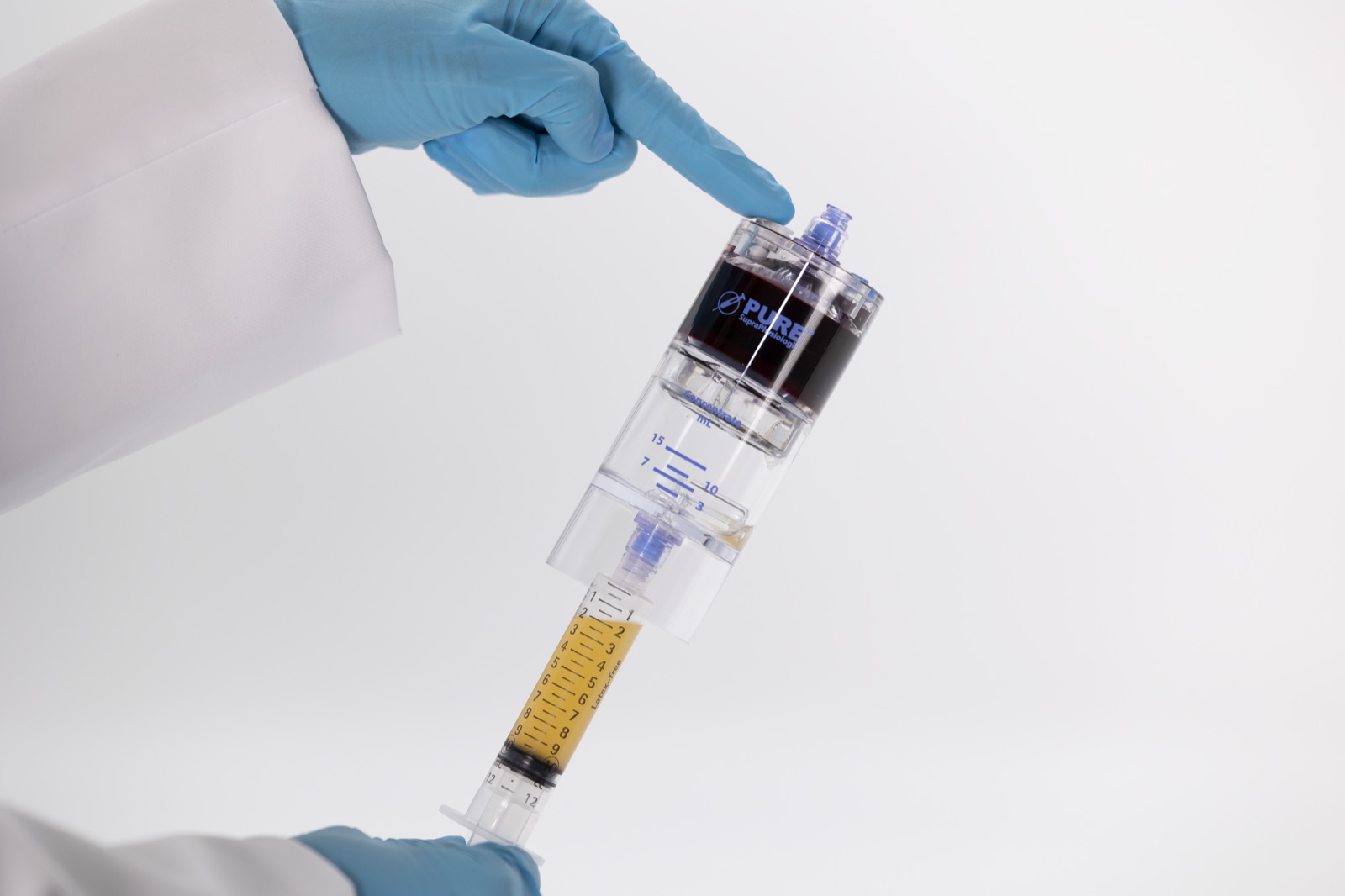
Platelet-rich plasma, or PRP, is a concentrate of platelets from your own blood, used to support hair follicles and skin. How it’s prepared changes what ends up in the syringe. At Cleon we use EmCyte PurePRP, a two-spin system that concentrates around 10 to 12 billion platelets from a 60 mL draw, and twice that from 120 mL.1,2 Dr Brandon looks for the cause first, and tells you honestly whether PRP is likely to help.
- Appointment
- About 1 hour
- A course, 4 weeks apart
- 3 sessions
- Afterwards
- Redness 1–3 days
- Single session
- From $900
- Course of 3
- From $2,400
EmCyte PurePRP kits are ARTG listed · ARTG ID 385251 · Class IIa medical device. PRP is offered only after a medical consultation, where it’s clinically appropriate.
Watch: PRP Treatment for Hair & Skin at Cleon
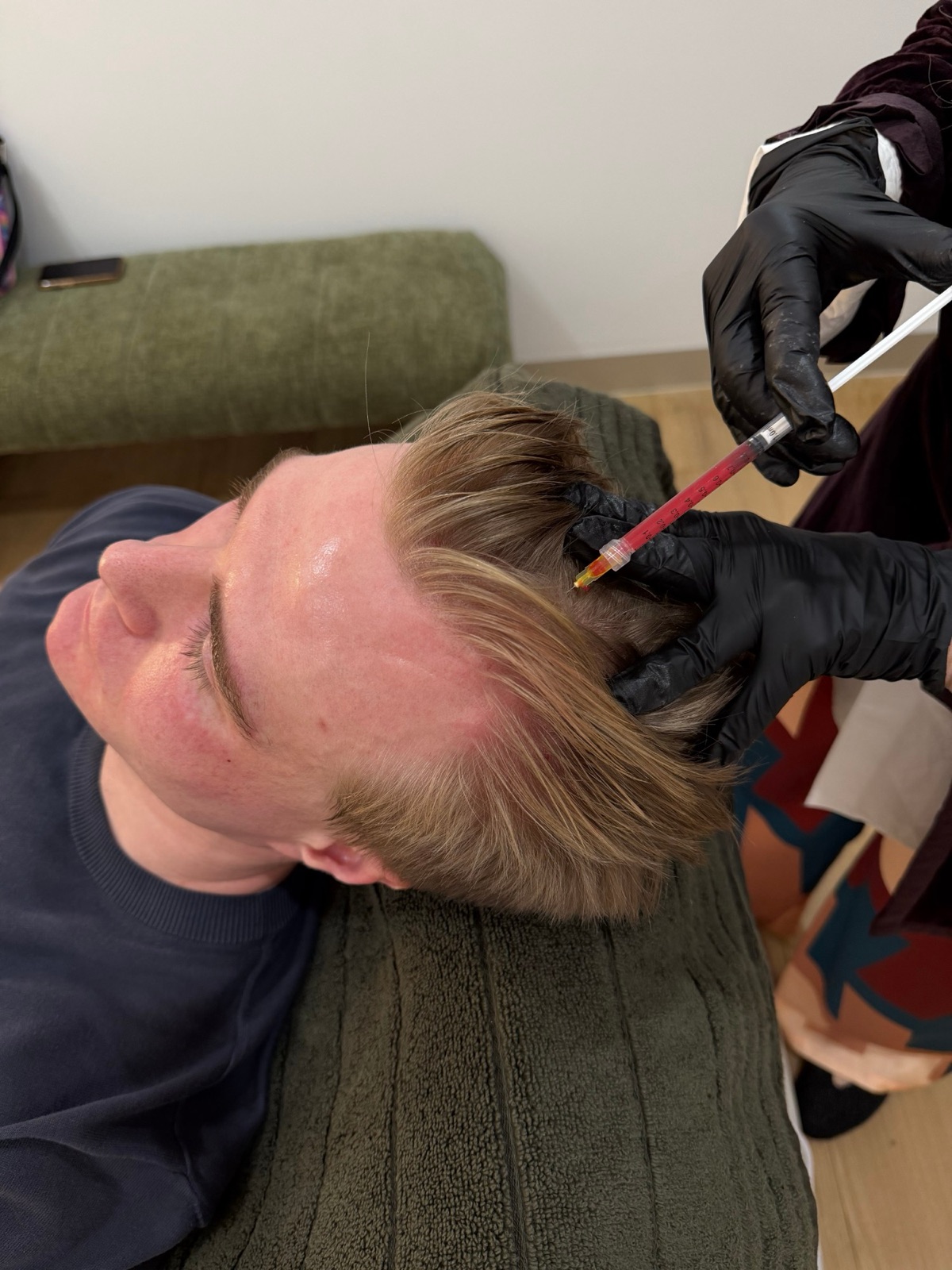
Dr Brandon on PRP for hair and skin: how PurePRP is prepared in clinic, and what a treatment looks like. Under a minute.
How it works
How does PRP work?
Platelets are best known for stopping bleeding. They also carry growth factors that tell cells to repair. PRP concentrates them, then places them where they’re needed: around hair follicles, or in the skin.3,4
-
Platelets
The growth factors
Each platelet carries growth factors such as PDGF, TGF-β, VEGF and EGF. Released into tissue, they signal cells to multiply, grow new blood vessels and build collagen.3 In the scalp, laboratory studies show PRP helps the cells at the base of the follicle survive, and may lengthen the growth phase.5,6
-
Monocytes
The regulators
White cells that help control inflammation and guide tissue repair.3 PurePRP keeps many of them, about 59% in laboratory testing, while removing over 90% of neutrophils. Those are white cells whose role in PRP is less clear, and which can add inflammation.2,7
-
Fewer red cells
What’s left out
Red cells that break down release iron-rich compounds that can irritate tissue, so good PRP keeps them low.3 PurePRP’s two spins leave most of them behind.2
PRP for hair
Can PRP help with hair loss?
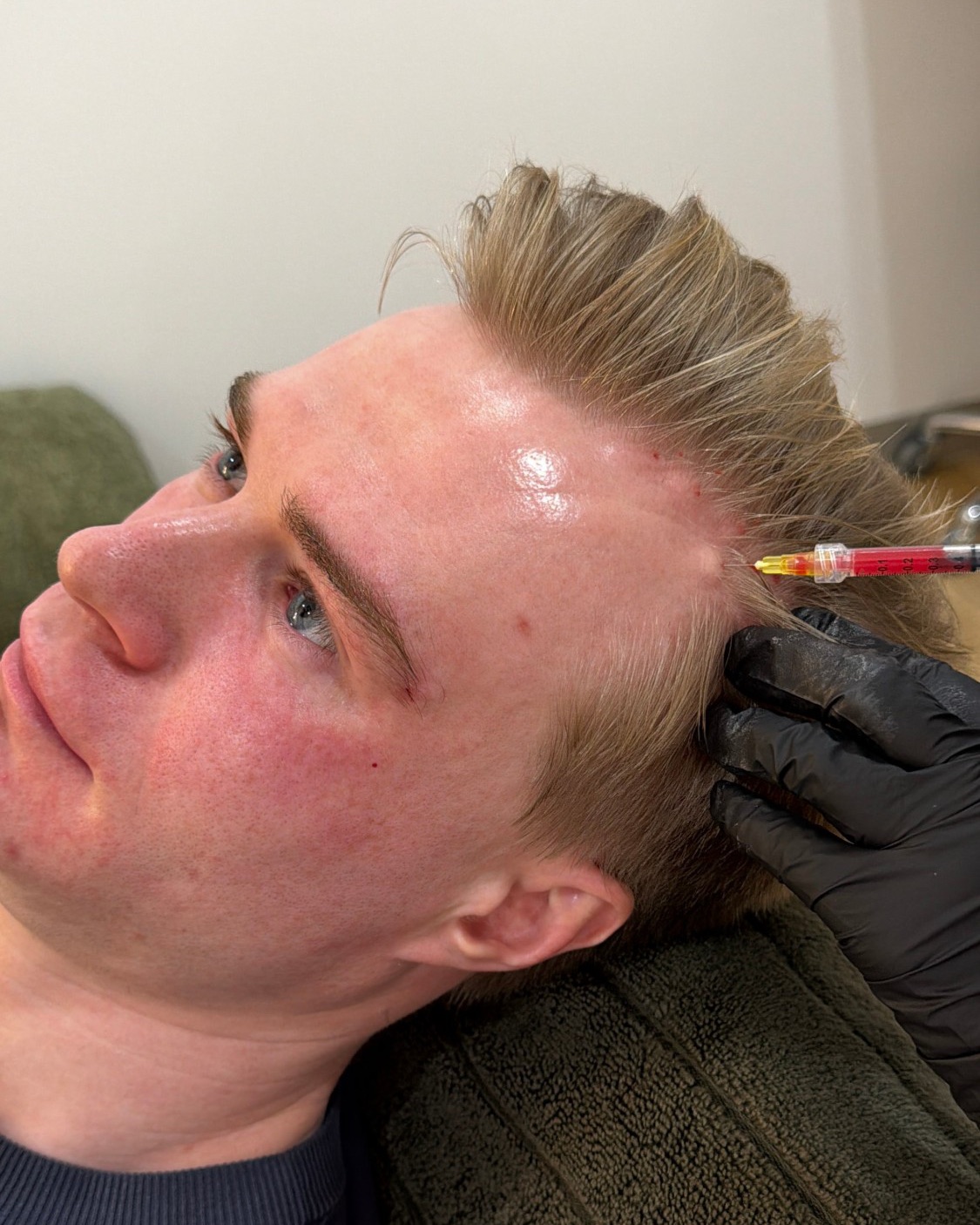
Often, for the right kind of hair loss, caught early. PRP has been studied most in pattern hair thinning, in women and men. It works best while follicles are still active. And it isn’t a cure: results need maintaining.8,9
-
Pattern hair thinning
Most studied
Androgenetic alopecia: a widening part, a thinning crown, receding temples. In one review, PRP improved hair growth in 10 of 12 studies, and a pooled analysis of 30 studies (687 patients) found gains in hair density and thickness.6,9 It usually sits alongside a home programme, not instead of one.
-
Shedding & diffuse thinning
Cause first
More hair in the brush, all over the scalp. Usually a response to something else: illness, stress, childbirth, a crash diet, a deficiency or a thyroid problem.10,11 Treat the cause and hair often recovers on its own.
-
Patchy or scarring hair loss
Specialist care
Alopecia areata and the scarring alopecias need a dermatologist’s diagnosis. Evidence for PRP here is limited to small studies and case reports.12,13 Where that’s the right path, we’ll refer you.
The evidence for PRP in pattern hair loss is encouraging, but not settled. Studies use different kits, doses and schedules, long-term data are limited, and one randomised trial found no significant difference from saline injections at three months.6,8,9 A European guideline review judged the evidence for women insufficient.5 Recent reviews describe PRP as an emerging, complementary option that shows promise.14 We’d rather you hear that from us.
The cause comes first
What’s behind your hair loss?
Hair grows in cycles: two to six years of growth, a few weeks of transition, then two to four months of rest before it sheds.15,16 Most hair loss is that cycle being pushed off course. Finding out why decides what will help. Not sure where to start? That’s what the consultation is for.
Pattern hair loss
The most common cause in women and men. Genes and hormones gradually shrink the follicles.6 It can sit alongside other health conditions, including hormonal ones such as polycystic ovary syndrome, so it’s worth checking.5,17
Shedding (telogen effluvium)
A sudden rise in shedding, often a few months after an illness, surgery, childbirth, stress or rapid weight loss.10,15 Usually temporary, once the trigger has passed.
Iron & vitamin D
Several studies link low iron stores and low vitamin D with shedding and thinning in women,18,19,20,21,22 though not all agree.10 Vitamin D plays a part in the hair cycle, but good evidence that supplements regrow hair is still lacking.23,24 Many over-the-counter hair products aren’t backed by strong evidence either.25 We test before we suggest anything.
Thyroid
Both an underactive and an overactive thyroid can cause shedding all over the scalp, and the link is often overlooked.11 A blood test checks it.
PRP for skin
What can PRP do for your skin?
The dermis, the layer under the surface, is full of collagen and elastic fibres. With age, the elastic fibres thin and fray, which contributes to wrinkles.33 There are fewer fibroblasts, the cells that make them, too.34 PRP’s growth factors are thought to switch those cells back on.3 The aim is better skin quality, not a different face.
-
Texture, tone & fine lines
The face
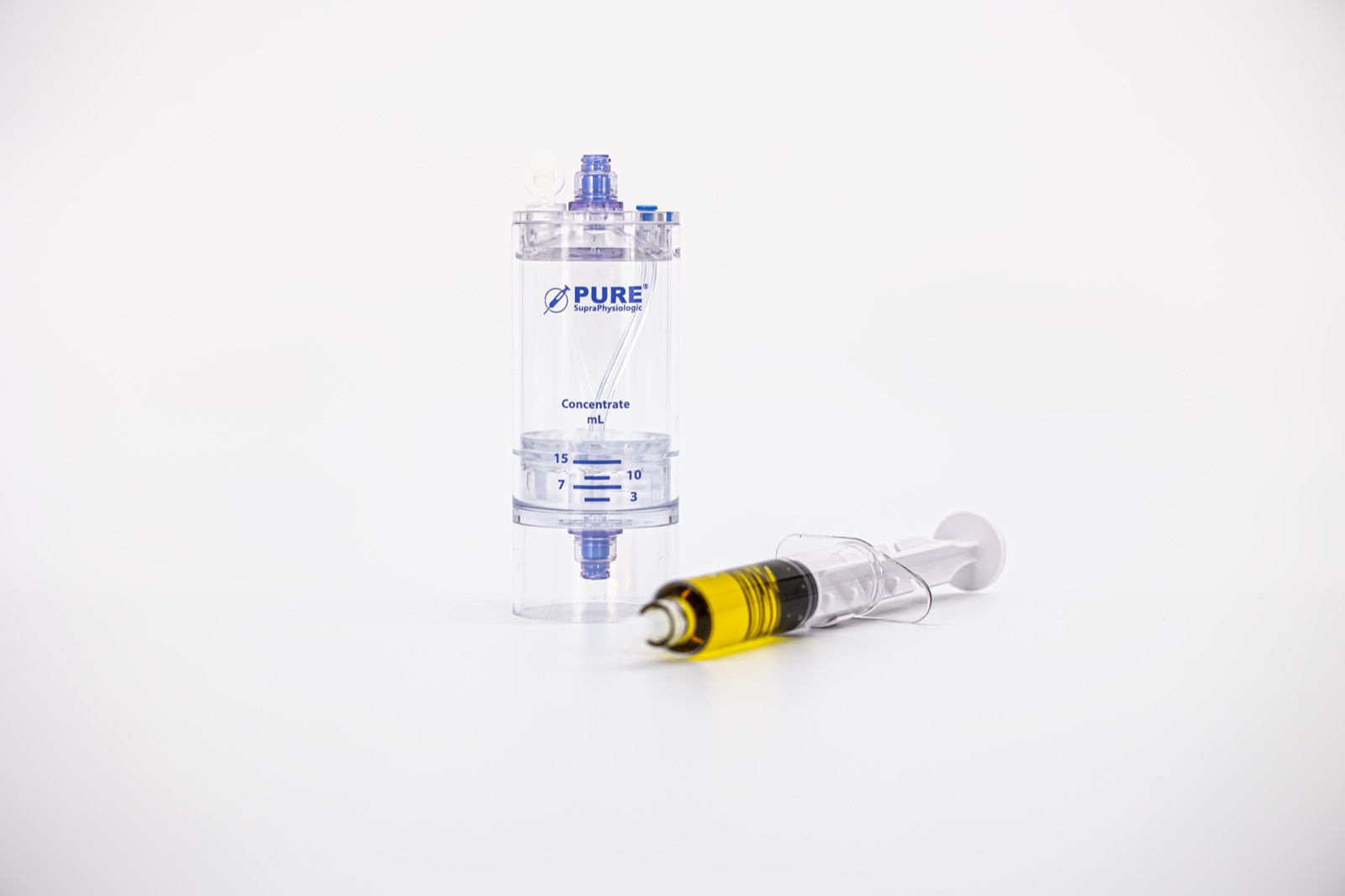
Where most of the research is. PurePRP is placed with fine injections into and just under the skin, a little at a time.34
-
Delicate areas
Same technique
Under the eyes, the neck, the décolletage and the backs of the hands are treated the same way. The evidence for these areas is thinner than for the face, and your plan will say so.
-
With skin needling
One visit
PRP can be applied during skin needling, while the micro-channels are open. Often chosen for scarring and thinner, crepey skin, as part of a Skin Quality plan.
In a small study of 11 women given three PurePRP treatments a month apart, measured wrinkle count fell by about a third at six months, and skin firmness and the density beneath the surface improved. The only side effect was minor bruising, which settled within three days.34 The study had no control group, and its lead author works with EmCyte. Larger independent trials are still needed.
PRP won’t lift sagging skin or replace lost volume. If that’s what you need, you’ll be told.
Why PurePRP
Why does Cleon use EmCyte PurePRP?
Because the preparation matters. Different PRP systems produce very different products, even from the same blood.2,35 Dr Brandon chose PurePRP for four reasons.
- Dose. A 120 mL draw and two spins concentrate around 20 to 24 billion platelets, about seven times your blood level. A 60 mL draw gives half that.1,2
- Make-up. Monocytes are kept, and most red cells and neutrophils are removed.2
- Regulation. The kit is ARTG listed as a Class IIa medical device, and a new sterile kit is used for every patient.
- Openness. EmCyte publishes its laboratory data, and PurePRP has been used in published skin research.2,34
Dose isn’t everything. But PRP that’s too dilute has less to deliver, and that choice is made before you’re in the chair.3 Dr Brandon consults and sets the plan. PurePRP is prepared and injected by our clinical team under his medical supervision.
The difference
How does PurePRP compare with tube PRP?
Many clinics prepare PRP in small gel tubes, spun once. In a laboratory comparison of five PRP systems using the same donors’ blood, this is how the 60 mL PurePRP kit and two gel-tube systems measured up.2 The 120 mL kit, which we favour, is shown from EmCyte’s own figures.1
| Measure | Gel-tube PRP | PurePRP 60 mL | PurePRP 120 mL |
|---|---|---|---|
| Blood drawn | 8 to 9 mL a tube | One 60 mL syringe | Two 60 mL syringes |
| Spins | One | Two | Two |
| PRP produced | About 5 to 7 mL | About 7 mL | 7 to 14 mL† |
| Platelets recovered | About 30 to 35% | About 78% | Same process† |
| Platelet concentration | About half your blood level | About 6.6 times your blood level | Up to 14 times your blood level† |
| Platelets per treatment | Under 1 billion a tube* | Around 10 to 12 billion | Around 20 to 24 billion |
| White cells | Almost none | 59% of monocytes and lymphocytes kept; over 90% of neutrophils removed | Same process† |
| Red cells | Almost none | Mostly removed | Same process† |
| Growth factors released | 6 to 55% of the PurePRP level | The reference level | About twice the 60 mL total† |
Each 60 mL syringe holds about 50 mL of blood plus anticoagulant. *Calculated from the recovery measured, at an average platelet count. †The 120 mL kit uses the same two-spin process but wasn’t part of the laboratory comparison. Its concentrate can be made up to between 7 mL (about 14 times your blood level) and 14 mL (about 7 times). These figures, and the platelet range for 60 mL, come from EmCyte’s published dose table.1 The laboratory study was carried out by Biosciences Research Associates (Cambridge, USA) using blood from four healthy donors, was commissioned by EmCyte, and is not peer reviewed.2 An earlier study by the same laboratory found higher platelet yields from PurePRP than from two other systems.7 These figures describe what’s in the syringe. On their own, they don’t show clinical results.
It’s the principle behind how we use PRP. Platelets carry the growth factors, so the number you receive matters. Research points to a minimum of around 7.5 billion platelets per treatment to stimulate new blood vessels and cell growth, and earlier data suggest a bigger dose brings a bigger effect.3 Independent laboratory work expects the same dose–response.35
That’s why we favour the 120 mL kit. It doubles the platelets, to around 20 to 24 billion, and gives Dr Brandon a choice. About 14 mL, at around seven times your blood level, covers the whole scalp, or the face, neck and décolletage, without spreading the dose thin. Or a smaller volume, up to 14 times your blood level, concentrates it on a focused area.1
Results still vary from person to person, and not every area needs 120 mL. Dr Brandon will recommend the dose that fits.
Is this right for me?
Am I suited to PRP?
This might suit you if
- Your hair is thinning gradually, and it’s still early
- You want better skin texture and softer fine lines, using your own blood
- You can commit to a course of three, then maintenance
- You’d like a doctor to look for the cause first
Worth discussing in consultation first
- A bleeding or platelet disorder, or you take blood thinners. Don’t stop a prescribed medicine without advice8,9
- An active infection or an autoimmune condition,8 cancer or recent chemotherapy, or a skin condition in the area to be treated
- You’re pregnant or breastfeeding
- Smooth, completely bald areas, or scarring hair loss. PRP can’t regrow follicles that have gone8,13
Pricing
How much does PRP cost in Sydney?
Prices are per treatment, for hair or skin. Your plan, including the volume, is set in consultation.
What to expect
How does a PRP course work?
Every patient follows the same journey. The detail is specific to you.
-
Consult
Dr Brandon takes your history, examines your scalp or skin, and tells you honestly whether PRP is likely to help. No treatment agenda.
-
Check
For hair loss, blood tests such as iron, vitamin D and thyroid are arranged where needed, so the cause is treated, not just the symptom.
-
Prepare
Drink plenty of water the day before and that morning. Numbing cream goes on when you arrive. Tell us first about blood thinners and supplements.
-
Draw & spin
We draw 60 or 120 mL of blood. It’s spun twice in a single-use kit, in clinic, while you wait.
-
Treat
Our clinical team places the PurePRP into your scalp or skin with fine injections, under Dr Brandon’s medical supervision.
-
Review
Sessions are four weeks apart. Progress is photographed and reviewed at each visit. Results are monitored, not assumed.
Frequently asked
PRP treatment in Sydney: your questions
PRP is part of our Hair and Skin Quality care. Anything else, ask at your consultation or email hello@cleonclinic.com.
What is PRP?
Platelet-rich plasma. A sample of your blood is spun in a centrifuge to concentrate the platelets, which carry growth factors involved in repair. The concentrate is then injected into the scalp or skin.3,4
What’s the difference between PRP and PRF?
Both come from your own blood. PRP is spun with an anticoagulant and stays liquid, so it can be injected in measured amounts. PRF is spun quickly without one, so it sets into a soft fibrin gel. Cleon uses PRP, prepared with the EmCyte PurePRP two-spin system.
How is EmCyte PurePRP different from other PRP?
It uses a larger blood draw and two spins. In laboratory testing it recovered about 78% of the platelets, concentrated them about 6.6 times, kept many monocytes and removed most neutrophils and red cells. Gel-tube systems in the same test held fewer platelets than the blood they came from.2 These are laboratory measures, not clinical results.
How many platelets are in a PurePRP treatment?
EmCyte’s figures are about 12 billion platelets from 60 mL and 24 billion from 120 mL, assuming an average platelet count.1 Laboratory testing measured about 78% recovery, which works out at around 10 billion from 60 mL.2 Your own platelet count varies, so your dose will too.
Does PRP work for hair loss?
For pattern hair thinning caught early, the evidence is encouraging. Most studies show gains in hair density and thickness.6,9 But methods vary, long-term data are limited, and it doesn’t work for everyone or for every type of hair loss.5,8 That’s why the cause comes first.
Does PRP work for men’s hair loss?
The same treatment is used for male pattern hair loss, where much of the research has been done. It works best in the early stages, while follicles are still active, and usually sits alongside a prescribed home programme.8,9 Men are welcome at Cleon, and through Male by Cleon.
Is PRP an alternative to a hair transplant?
Not for advanced hair loss. PRP can’t regrow follicles that have gone; a transplant moves follicles from elsewhere. For early thinning, PRP may help hold and thicken the hair you have.8 It has also been studied alongside transplant surgery, to support the transplanted follicles.5 If surgery is the right path, Dr Brandon will say so and refer you.
How long until I see results?
For hair, change is gradual. Studies measure it at three to six months, after monthly sessions.8,14 For skin, changes in texture and firmness have been measured from two months.34 Results vary between people.
How many sessions will I need?
Usually a course of three, four weeks apart. For hair, maintenance sessions often follow every three to six months.8,14 PRP isn’t a cure for pattern hair loss, so results need maintaining.9
Does PRP hurt?
Numbing cream goes on first. Most people feel stinging and pressure. Scalp injections can be more uncomfortable, but this usually settles within 10 to 15 minutes.8
Is PRP safe?
PRP is made from your own blood, so an allergic reaction to it is unlikely. The kit is single-use and ARTG listed, and treatment at Cleon is doctor-led. Side effects are usually mild and short-lived: redness, swelling, tenderness and sometimes bruising.9 Less common risks exist, and PRP doesn’t suit everyone, which is why it’s only offered after a consultation.5,8
What are the side effects and risks?
Redness, swelling and tenderness for a day or two, and sometimes bruising, especially under the eyes. After scalp treatment, a brief headache or burning feeling can occur.9 Less common are infection, a temporary rise in shedding, scalp irritation, small lumps, changes in skin colour and, rarely, scarring.5 Because PRP is made from your own blood, an allergic reaction to it is unlikely, though you can react to numbing cream. Every risk is explained before you decide.
Who shouldn’t have PRP?
PRP may not suit you if you have a bleeding or platelet disorder, take blood thinners, or have an active infection or an autoimmune condition.8 The same goes if you’re pregnant or breastfeeding, or have cancer or a serious illness. Tell us about every medicine and supplement you take.
Do I need blood tests before PRP for hair?
Often, yes. Low iron stores, low vitamin D and thyroid problems have all been linked with hair loss, and they’re simple to check.11,18,22 If one is found, treating it comes first.
Can PRP help hair grow back after chemotherapy?
Hair usually regrows within three to six months of finishing chemotherapy.36,37 PRP is being studied as a way to help regrowth, but the evidence is still early.37 Any treatment should be agreed with your oncology team first.
Is PRP TGA approved?
PRP isn’t a manufactured product. Under TGA guidance, PRP made from your own blood and used by, or under the supervision of, your doctor is exempt from most registration requirements. The EmCyte PurePRP kit used to prepare it is ARTG listed: ARTG ID 385251, Class IIa medical device.
Can PRP be combined with other treatments?
Yes, often. For hair, alongside a home programme prescribed for the cause. For skin, with skin needling in the same visit. We leave two weeks between PRP and other cosmetic injectables.
How should I prepare, and what’s the aftercare?
Drink at least a litre of water the day before and that morning, and avoid booking within a week of a long-haul flight. Tell us about blood thinners, fish oil and other supplements, but don’t stop a prescribed medicine without advice. Afterwards, don’t touch the area for two hours, and skip make-up, active skincare, saunas, hard exercise and alcohol for 24 hours.
How much does PRP cost in Sydney?
At Cleon, a single 60 mL PurePRP session is $900, a course of three is $2,400, and a maintenance session is $800. With 120 mL, it’s $1,200, $3,000 and $1,000. Your plan and its cost are confirmed in consultation, before anything goes ahead.
Is there a PRP clinic near me in Sydney?
Cleon by Dr Brandon is at Ground 02, 46a Macleay Street, Potts Point, a short walk from Kings Cross station and close to Darlinghurst, Elizabeth Bay, Rushcutters Bay and the eastern suburbs. PurePRP is prepared on site, on the day of your treatment.
Book a consultation
Your own platelets, prepared properly.
Face to face at our Potts Point clinic, a short walk from Kings Cross station. Dr Brandon assesses you and sets the plan, and nothing happens without your agreement.
The evidence
References
The studies behind the clinical claims on this page. Evidence for PRP is still developing, and sources funded by or linked to EmCyte are marked. Last reviewed October 2026.
- 1EmCyte Corporation, High Tech Medical. EmCyte platelet (PLT) concentration & PLT dose: GS30, GS60 and GS120 PurePRP II double spin kits. Product data sheet; 2024. Assumes a baseline of 250,000 platelets/µL. Manufacturer data.
- 2Mandle RJ. Comparison of EmCyte GS30-PurePRP II, GS60-PurePRP II, Arteriocyte Magellan, Stryker Regenkit-THT and Eclipse PRP. Biosciences Research Associates, Cambridge MA; 2016. Four donors; not peer reviewed. Commissioned by EmCyte.
- 3Everts P, Onishi K, Jayaram P, Lana JF, Mautner K. Platelet-rich plasma: new performance understandings and therapeutic considerations in 2020. Int J Mol Sci. 2020;21:7794. doi:10.3390/ijms21207794 Lead author linked to EmCyte.
- 4Vincenzi C, Marisaldi B, Tosti A. Regenerative treatments: microneedling and PRP. In: Tosti A, Asz-Sigall D, Pirmez R, eds. Hair and Scalp Treatments: A Practical Guide. Springer; 2020:35–46. doi:10.1007/978-3-030-21555-2
- 5Starace M, Orlando G, Alessandrini A, Piraccini BM. Female androgenetic alopecia: an update on diagnosis and management. Am J Clin Dermatol. 2020;21:69–84. doi:10.1007/s40257-019-00479-x
- 6Ntshingila S, Oputu O, Arowolo AT, Khumalo NP. Androgenetic alopecia: an update. JAAD Int. 2023;13:150–158.
- 7Mandle RJ. Report 515: Comparisons of EmCyte PurePRP II, Harvest/Terumo Clear PRP and Arthrex Angel PRP products. Biosciences Research Associates, Cambridge MA; 2015. Seven donors; not peer reviewed. Commissioned by EmCyte.
- 8Nestor MS, Ablon G, Gade A, Han H, Fischer DL. Treatment options for androgenetic alopecia: efficacy, side effects, compliance, financial considerations, and ethics. J Cosmet Dermatol. 2021;20:3759–3781. doi:10.1111/jocd.14537
- 9Devjani S, Ezemma O, Kelley KJ, Stratton E, Senna M. Androgenetic alopecia: therapy update. Drugs. 2023;83:701–715. doi:10.1007/s40265-023-01880-x
- 10Durusu Turkoglu IN, Turkoglu AK, Soylu S, Gencer G, Duman R. A comprehensive investigation of biochemical status in patients with telogen effluvium. J Cosmet Dermatol. 2024. doi:10.1111/jocd.16512
- 11Hussein RS, Atia T, Bin Dayel S. Impact of thyroid dysfunction on hair disorders. Cureus. 2023;15:e43266. doi:10.7759/cureus.43266
- 12Lintzeri DA, Constantinou A, Hillmann K, Ghoreschi K, Vogt A, Blume-Peytavi U. Alopecia areata: current understanding and management. J Dtsch Dermatol Ges. 2022;20:59–90. doi:10.1111/ddg.14689
- 13Suh S, Mesinkovska NA. PRP for scarring alopecia. In: Khetarpal S, ed. Aesthetic Clinician’s Guide to Platelet Rich Plasma. Springer; 2021:71–81. doi:10.1007/978-3-030-81427-4_6
- 14Zhuang-Yan A, Hoy SM. Manage androgenetic alopecia in men with established options but emerging therapies show promise. Drugs Ther Perspect. 2023;39:292–296. doi:10.1007/s40267-023-01011-2
- 15Krause K, Foitzik K. Biology of the hair follicle: the basics. Semin Cutan Med Surg. 2006;25:2–10.
- 16Stenn KS, Paus R. Controls of hair follicle cycling. Physiol Rev. 2001;81:449–494.
- 17Chen S, Xie X, Zhang G, Zhang Y. Comorbidities in androgenetic alopecia: a comprehensive review. Dermatol Ther (Heidelb). 2022;12:2233–2247. doi:10.1007/s13555-022-00799-7
- 18Rasheed H, Mahgoub D, Hegazy R, et al. Serum ferritin and vitamin D in female hair loss: do they play a role? Skin Pharmacol Physiol. 2013;26:101–107.
- 19Naser RT, Fadheel QJ, Hafedh AH. The significance of serum ferritin and vitamin D levels in female patients with chronic telogen effluvium. Indian J Forensic Med Toxicol. 2021;15:3992–4000.
- 20Rani S, Chitkara A, Sharma PK, Sinha S, Sharma P. An analytical study of serum ferritin, vitamin D, and thyroid function in females with diffuse hair loss. Indian J Dermatopathol Diagn Dermatol. 2022;9:10–14. doi:10.4103/ijdpdd.ijdpdd_19_21
- 21Farah HS, Abu Hajleh MN, Shalan N, Al Assi G, Alqaisi T. The association between the levels of ferritin, TSH, zinc, Hb, vitamin B12, vitamin D and the hair loss among different age groups of women. Int J Pharm Res. 2021;13:142–148. doi:10.31838/ijpr/2021.13.02.038
- 22Banihashemi M, Nahidi Y, Meibodi NT, Jarahi L, Dolatkhah M. Serum vitamin D3 level in patients with female pattern hair loss. Int J Trichology. 2016;8:116–120. doi:10.4103/0974-7753.188965
- 23Demay MB, MacDonald PN, Skorija K, Dowd DR, Cianferotti L, Cox M. Role of the vitamin D receptor in hair follicle biology. J Steroid Biochem Mol Biol. 2007;103:344–346.
- 24Saini K, Mysore V. Role of vitamin D in hair loss: a short review. J Cosmet Dermatol. 2021;20:3407–3414. doi:10.1111/jocd.14421
- 25Anastassakis K. Androgenetic Alopecia From A to Z. Vol 2: Drugs, Herbs, Nutrition and Supplements. Springer; 2022. doi:10.1007/978-3-031-08057-9
- 26Lee HH, Gwillim E, Patel KR, et al. Epidemiology of alopecia areata, ophiasis, totalis, and universalis: a systematic review and meta-analysis. J Am Acad Dermatol. 2020;82:675–682.
- 27Okhovat JP, Marks DH, Manatis-Lornell A, Hagigeorges D, Locascio JJ, Senna MM. Association between alopecia areata, anxiety, and depression: a systematic review and meta-analysis. J Am Acad Dermatol. 2023;88:1040–1050.
- 28Torales J, Castaldelli-Maia JM, Ventriglio A, et al. Alopecia areata: a psychodermatological perspective. J Cosmet Dermatol. 2022;21:2318–2323. doi:10.1111/jocd.14416
- 29Zhou C, Li X, Wang C, Zhang J. Alopecia areata: an update on etiopathogenesis, diagnosis, and management. Clin Rev Allergy Immunol. 2021;61:403–423. doi:10.1007/s12016-021-08883-0
- 30Meah N, Wall D, York K, et al. The Alopecia Areata Consensus of Experts (ACE) study: results of an international expert opinion on treatments for alopecia areata. J Am Acad Dermatol. 2020;83:123–130.
- 31Porriño-Bustamante ML, Fernández-Pugnaire MA, Arias-Santiago S. Frontal fibrosing alopecia: a review. J Clin Med. 2021;10:1805. doi:10.3390/jcm10091805
- 32Griggs J, Trüeb RM, Gavazzoni Dias MFR, Hordinsky M, Tosti A. Fibrosing alopecia in a pattern distribution. J Am Acad Dermatol. 2021;85:1557–1564.
- 33Koeppen BM, Niekrash CE. Anatomy of the integumentary system. In: Ferneini EM, Goupil MT, McNulty MA, Niekrash CE, eds. Applied Head and Neck Anatomy for the Facial Cosmetic Surgeon. Springer; 2021.
- 34Everts PA, Pinto PC, Girão L. Platelet-rich plasma injections for facial rejuvenation. PRIME. 2018;Jul/Aug:15–23. Lead author linked to EmCyte.
- 35Mazzucco L, Balbo V, Cattana E, Guaschino R, Borzini P. Not every PRP-gel is born equal. Vox Sang. 2009;97:110–118. doi:10.1111/j.1423-0410.2009.01188.x
- 36Rossi A, Caro G, Fortuna MC, Pigliacelli F, D’Arino A, Carlesimo M. Prevention and treatment of chemotherapy-induced alopecia. Dermatol Pract Concept. 2020;10:e2020074. doi:10.5826/dpc.1003a74
- 37Wikramanayake TC, Haberland NI, Akhundlu A, Laboy Nieves A, Miteva M. Prevention and treatment of chemotherapy-induced alopecia: what is available and what is coming? Curr Oncol. 2023;30:3609–3626. doi:10.3390/curroncol30040275
EmCyte and PurePRP are trademarks of EmCyte Corporation.
