

Beautification · Potts Point, Sydney
Facial Contouring & Balancing in Sydney
Light, shadow and proportion.
You already work with all three every time you do your make-up: a little more light here, a little less shadow there. Beautification takes the same approach with the face itself. Small, considered adjustments across different areas, to improve balance, shape and refinement, planned by a doctor who assesses the whole face before touching any part of it.

The approach
What is beautification at Cleon?
Facial contouring that starts with how your face is read, not with a product or a device. Proportion, structure and movement are considered together before any adjustment is made.
Beautification at Cleon is facial contouring and balancing for women, planned across the whole face. A doctor assesses proportion, structure and movement together, then builds a plan from the most appropriate tools: skin treatments, regenerative treatments and, where appropriate, prescription-only medical treatments for structure, volume or movement. Australian law doesn’t allow those to be advertised or priced online, so they’re discussed and priced at your consultation. The aim is refinement that reads as you, not as treatment.

Structure & proportion
Treatments that refine the shape of the face and restore balance by adjusting structure and volume where it’s needed: cheeks, chin, jawline, temples, under the eyes. Medical treatments, guided by anatomy, designed to look like nothing was done.

Position & movement
Where a feature sits, and how it moves. Easing the muscles of expression can change how the brow sits, how the jaw reads or how the lower face holds, without changing how you look. Anti-wrinkle treatment is part of this.

Skin quality
Texture, tone and finish decide how light lands on the face. Skin and regenerative treatments, from peels and needling to laser, LED and PRP, chosen for your skin and layered into the plan.
What it covers
What can facial contouring and balancing address?
Your plan is set in consultation. These are the concerns this approach covers, from a single feature to the whole face.

Under-eye hollowing
Shadows and a tired look that sleep doesn’t fix. Assessed with the cheek and mid-face, because the hollow usually starts there.

Mid-face volume
The soft fullness over the cheekbone that flattens with the years and makes the whole face read as tired. Restored in proportion, never built up.

Cheek structure
Definition at the cheekbone that gives the face its light. Planned with the under-eye and the jawline, both of which it changes.

Facial asymmetry
Every face is a little uneven. Where one side draws the eye, small adjustments can even the read without making either side look done.

Jawline definition
A cleaner line from chin to ear. Structure where it’s lacking along the jaw, and sometimes less bulk where the jaw muscles have grown.

Chin balance
A chin that’s a little short or set back changes the profile, and the jawline with it. Brought into proportion with the nose and the lips.

Brow position
Where the brow sits and how it moves. A small lift at the tail, or a heavy brow eased back to where it was, by working on the muscles that hold it.

Temple hollowing
Hollow temples narrow the upper face and drop the tail of the brow. Easily missed, and often the quiet reason a face reads older.
Nose shape is assessed alongside the cheeks and chin; non-surgical rhinoplasty has its own page. Men are seen through Appearance at Male by Cleon.
How we plan
How does facial contouring work?
The same way a good portrait does. Three things decide how a face is read, and a plan works on all three together.
-
Light
Where the face catches it
The high points: the cheekbones, the tip of the chin, the bridge of the nose, the brow bone. When these have enough structure the face looks rested and defined. When they’ve flattened, it looks tired. Restoring a high point brings the light back.
-
Shadow
Where it’s lost
The hollows: under the eyes, at the temples, through the mid-face, at the corners of the mouth. Shadows read as fatigue and age even on a young face. Softening a shadow is often more effective than adding to a high point, and it takes less.
-
Proportion
How it fits together
The relationships: chin to nose, jaw to cheek, one side to the other. Treating a feature on its own is where results start to look done. Treating the relationship is where they look like nothing happened.
Is this right for me?
Am I suited to facial contouring?
This might suit you if
- You look tired or older than you feel, and can’t point to a single line that’s the cause
- One feature draws the eye: a short chin, a soft jaw, hollows under the eyes or at the temples
- You want refinement that reads as you, not a different face
- You’re in good general health, with realistic expectations
Worth discussing in consultation first
- You’re pregnant, breastfeeding or planning a pregnancy. We wait
- You’ve had treatment elsewhere that you’re unsure about, or a permanent product. Bring what you know; an ultrasound assessment can show what’s there
- You have an active skin infection or cold sores, an autoimmune or bleeding condition, or take blood thinners
- Your main concern is skin: sun damage, texture or pigment. That’s a skin plan first, and we’ll say so
A doctor-led clinic
Why have facial contouring at a doctor-led clinic?
Because the judgement is the treatment. Knowing what to adjust matters less than knowing what to leave alone, and the difference between a refined face and an obviously treated one is usually restraint. Your face is assessed as a whole, at rest and in movement, and the plan is set for it. The consultation is the medicine.
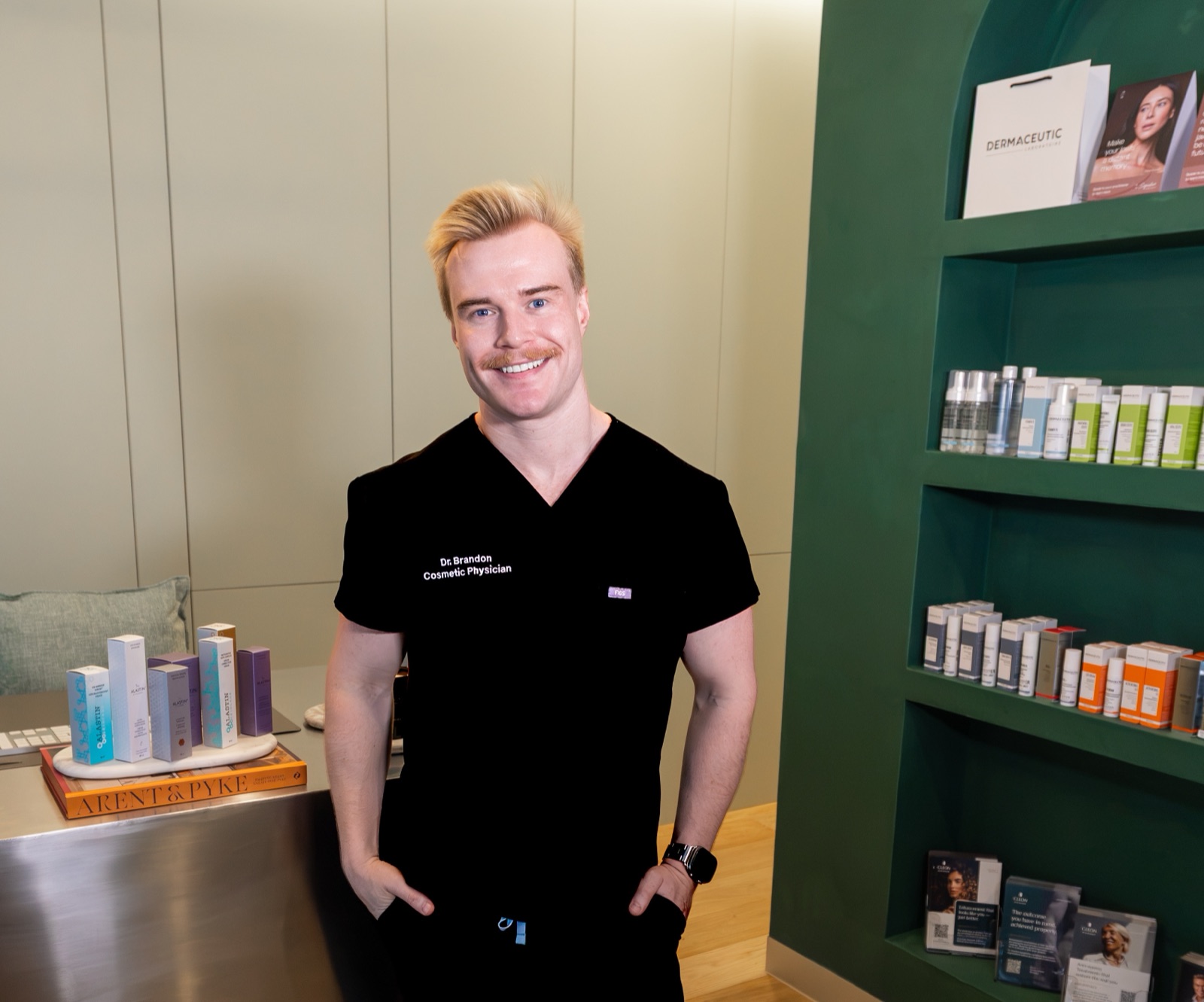
Cleon was founded by Dr Brandon, a cosmetic doctor. Every plan is set by a doctor, treatment is performed by our clinical team under medical supervision, and results are reviewed, not assumed. If a feature is better left alone, we’ll tell you so.
What to expect
What happens at a beautification consultation?
The steps are the same for everyone. The plan is yours.
-
Book
A free video call from wherever you are, or an hour face to face at our Potts Point clinic. The conversation comes first.
-
Consult
We listen to what bothers you and look at the face in full context: proportion, structure, movement and skin, at rest and in expression. Photos for your file. No treatment agenda.
-
Your plan
A personalised plan, and its price: in-clinic treatments, home skincare and ongoing care, using skin treatments, regenerative work and prescription-only treatments where appropriate. Every plan is set by a doctor.
-
First treatment
Face-to-face appointments often include your first in-clinic treatment in the same session. Nothing happens without your agreement.
-
Home care
Clinic-prescribed products for home use, specific to your skin and your concern, not a generic routine.
-
Follow up
We review your progress and adjust the plan. Results are monitored, not assumed.
Two ways to start: a free video call, or an hour in clinic for $100, which comes off any treatment done on the day. Structural treatments are prescription-only, so they’re priced at your consultation, not online. All pricing.
Frequently asked
Facial contouring and balancing in Sydney: your questions
Beautification is one of The Clinic’s five areas, alongside Ageing Well and Skin Quality. Anything else, ask at your consultation or email hello@cleonclinic.com.
What is facial contouring, and is it the same as facial balancing?
The same idea under different names. Facial contouring, facial balancing and facial harmonisation all describe adjusting light, shadow and proportion across the face so it reads as rested and in proportion. At Cleon it’s called beautification, and it’s planned across the whole face rather than one feature at a time.
Do I need to know what treatment I want before booking?
No. Most people don’t, and it’s usually better that way. Facial refinement isn’t about choosing between treatments. It’s about understanding how your features sit together and what would improve the balance. The consultation is designed to assess your face as a whole and recommend the most appropriate approach.
How do you decide what needs treating?
The face is assessed as a whole, not feature by feature. Proportion, structure and movement are considered together to work out what is creating the imbalance or drawing the eye. Treatment is then guided by what will make the most natural-looking difference. Treating a single feature in isolation is where results most often start to look unnatural.
Is facial contouring surgical?
No. Everything on this page is non-surgical, done in clinic without a general anaesthetic or a recovery week. Where surgery would genuinely be the better answer, for a chin or a jaw for example, we’ll say so and refer you on.
How much does facial contouring cost in Sydney?
It depends on your plan, and Australian law doesn’t allow prescription-only products, or their prices, to be advertised. So structural treatments are priced at your consultation, before anything goes ahead. The consultation itself is priced plainly: a free video call, or an hour in clinic for $100, which comes off any treatment done on the day. Skin treatments have set prices on our pricing page. There’s no Medicare rebate for cosmetic treatment.
How much does “X mL” cost?
It’s a common question, and not quite the right one. It usually refers to dermal filler, a prescription-only product that can’t be advertised or priced online. More to the point, volume isn’t the goal. Planning around an amount assumes more product means a better result, and in practice it’s how faces end up looking unbalanced or overdone. We plan around your face as a whole and use what the plan needs, which is often less than people expect.
Will I still look like myself?
Yes. That is always the aim. Treatment is designed to refine and enhance your existing features, not change them. The result should look natural, and consistent with you.
Will it look overdone? How subtle are the results?
The aim is always subtle refinement: changes that improve how the face is perceived overall, rather than making any one adjustment obvious. Overdone faces usually come from treating a feature on its own, or from chasing volume. Treating the relationship between features, with restraint, is what keeps a result quiet.
What areas of the face are usually treated together?
It depends on the individual, but features are rarely treated in isolation. The under-eye area, the mid-face and cheek structure influence each other, as do the jawline and the chin. The temples change how the brow sits. Nose proportion is considered alongside the cheeks and chin, and for anyone who wants to refine the nose without surgery, non-surgical rhinoplasty is assessed at the same consultation. Looking at these relationships is what creates a balanced outcome.
Do I need medical treatments for facial balancing?
Not always. Some concerns can be improved with skin or device-based treatments, while others benefit from medical approaches that address structure, volume or movement. Which is right for you is decided at the consultation, based on what will create the most natural result.
Is facial contouring safe?
Every treatment has risks, and we’ll go through the ones that apply to your plan before anything goes ahead. Skin treatments carry small, short-lived ones. Structural treatments carry rare but serious ones, which is why they’re planned by a doctor who knows the anatomy, performed under medical supervision, and never done from a menu. If a treatment isn’t right for you, we’ll say so.
How long does a treatment take, and is there downtime?
Most in-clinic treatments take between fifteen minutes and an hour, and many can follow the consultation on the same day. Downtime depends on the treatment: none to speak of for most movement treatments, a few days of possible swelling or bruising for structural ones, and anything from a day to a week for skin treatments. We’ll tell you what to expect for your plan, and when to book it if you have an event coming up.
How long do the results last?
It depends on what’s done. Movement treatments last about three to four months. Structural treatments last many months to a year or more, depending on the area and the product. Skin treatments build over a course and are maintained. Every plan includes a review, so results are monitored rather than assumed.
Can facial contouring fix asymmetry?
Every face is asymmetric, and perfect symmetry isn’t the aim; faces that have it look odd. What can be done is to even the read: where one side draws the eye because of a flatter cheek, a heavier brow or a jaw that sits differently, small adjustments on one side can bring the two closer. It’s assessed at rest and in movement, because asymmetry is often about how a face moves, not just how it sits.
What about under-eye hollows and dark circles?
They’re not the same problem. A hollow is a shadow cast by a lack of support, usually beginning in the cheek, and it’s improved by restoring that support. Dark circles can be pigment, thin skin showing the vessels beneath, or both, and those need skin treatment rather than structure. Many people have a mix, which is why the under-eye is assessed with the cheek and the skin together.
Can you define my jawline without surgery?
Often, yes. A soft jawline usually comes from one of three things: a lack of structure along the jaw or at the chin, jaw muscles that have grown with clenching, or skin that has loosened. Each is treated differently, and the consultation works out which you have. For a chin that is set well back, surgery may be the honest answer, and we’ll say so.
Is beautification for men too?
The principles are the same, but men’s faces are planned differently: a heavier brow, a squarer jaw, a flatter cheek. Men are seen through Appearance at Male by Cleon, our men’s side of the clinic.
What age is beautification for?
There’s no set age, and no feature is treated because of a number. In your twenties it’s usually proportion: a chin, a jawline, the nose. From the thirties and forties it’s often the first shadows, under the eyes and at the temples. Later it sits alongside Ageing Well, where structure, skin and movement are planned together. Under 18, we don’t treat.
Can I combine it with skin treatments?
Usually, and most plans do. Chemical peels, skin needling, laser resurfacing, LED and PRP all change how light lands on the skin, which is half of how a face is read. The order and spacing are set in your plan.
What if I’ve had cosmetic or medical treatments elsewhere?
That’s very common. The focus is on assessing your current facial structure and balance, rather than continuing with a previous approach. Where there’s a question about what was used or where it sits, an ultrasound assessment can show it, and in some cases treatment is adjusted or cleared to create a more natural result.
Do you offer non-surgical rhinoplasty?
Yes. The nose is assessed as part of the whole face, because its proportion depends on the cheeks and the chin as much as on the nose itself. Non-surgical rhinoplasty has its own page.
Where can I find a facial contouring clinic near me in Sydney?
Cleon by Dr Brandon is at Ground 02, 46a Macleay Street, Potts Point, a short walk from Kings Cross station and close to Elizabeth Bay, Rushcutters Bay, Darlinghurst, Woolloomooloo and the eastern suburbs. Consultations are face to face at the clinic, or by free video call first.
Also at Cleon by Dr Brandon
More ways to start.
Ageing Well
Lines, structure and skin, planned together so you look rested rather than treated.
Skin Quality
Texture, tone and pigment: peels, needling, laser, LED and regenerative treatments.
Corrective & Medical
Filler dissolving, hyperhidrosis, TMJ and jaw clenching, hay fever and more, assessed by a doctor.
Book a consultation
Refined, not rearranged.
Face to face at our Potts Point clinic, or a free video call first. Your plan is set by a doctor, and nothing happens without your agreement.
