

Exercise and Skin Health
Most people don’t start exercising because they want better skin. They want to feel stronger, improve their fitness, clear their head or simply get out of the house.
Those are good reasons on their own. But exercise may also benefit the skin, and there is some interesting research looking beyond the temporary glow you get after a workout.
The important thing is to keep those benefits in perspective. Exercise supports your health. It doesn’t guarantee clear skin or replace sun protection.
What is behind the post-workout glow?
As your body warms up during exercise, blood flow to the skin increases to help release heat.1 That contributes to the flushed appearance you might notice after a workout. It is a normal cooling response, rather than proof that your skin has been rejuvenated.
The longer-term question is more interesting: can regular exercise change the way our skin ages?
Can exercise help with collagen?
There is early evidence that exercise may influence the skin’s supporting structure.
A small 2023 study compared aerobic exercise with resistance training over 16 weeks in previously inactive, middle-aged Japanese women. Both groups showed improvements in measures of skin elasticity and upper skin structure. The resistance-training group also showed an increase in the thickness of the dermis, the deeper supporting layer of the skin.2
That is promising, but it needs context. The study was small, involved a specific group of women and didn’t include a non-exercising comparison group. It doesn’t establish that lifting weights will visibly reverse ageing or produce the same results for everyone.
I wouldn’t prescribe a gym programme as a wrinkle treatment. I would see this as another reason to be interested in what regular movement does for our health.
Stress, sleep and skin
Regular physical activity can improve sleep and mental wellbeing.3,4 Those benefits matter even if you never notice a change in your complexion.
I would be cautious about claims that exercise simply “balances your hormones” or lowers cortisol to clear acne. That makes a complicated relationship sound far more predictable than it is.
Exercise can be part of looking after yourself, but persistent acne, eczema or other skin concerns still deserve proper assessment. Having a skin condition doesn’t mean you aren’t exercising enough or managing stress properly.
Sweat doesn’t clean your pores
Sweat’s main job is to help regulate body temperature.1 It isn’t a facial cleanser, and sweating more isn’t a reliable way to clear congestion.
For some people, the combination of heat, trapped sweat and friction from clothing or equipment can contribute to breakouts.5 You might notice this beneath a helmet, along a tight waistband or across your back. That doesn’t mean you need to stop exercising. It means the practical details around your workout may need adjusting.
Change out of damp clothing when you can, gently cleanse after training and keep equipment that touches your skin clean. During a workout, pat sweat away with a clean towel rather than repeatedly rubbing your face. There’s no need to scrub your skin afterwards.
Remember the sun if you train outdoors
Walking, running, swimming and outdoor sport can mean regular UV exposure. The health benefits of exercise don’t cancel out sun damage.
Use appropriate sun protection, including a water-resistant, broad-spectrum sunscreen, protective clothing and shade where practical. Reapply sunscreen after swimming, heavy sweating or towelling, and every two hours while outdoors.6
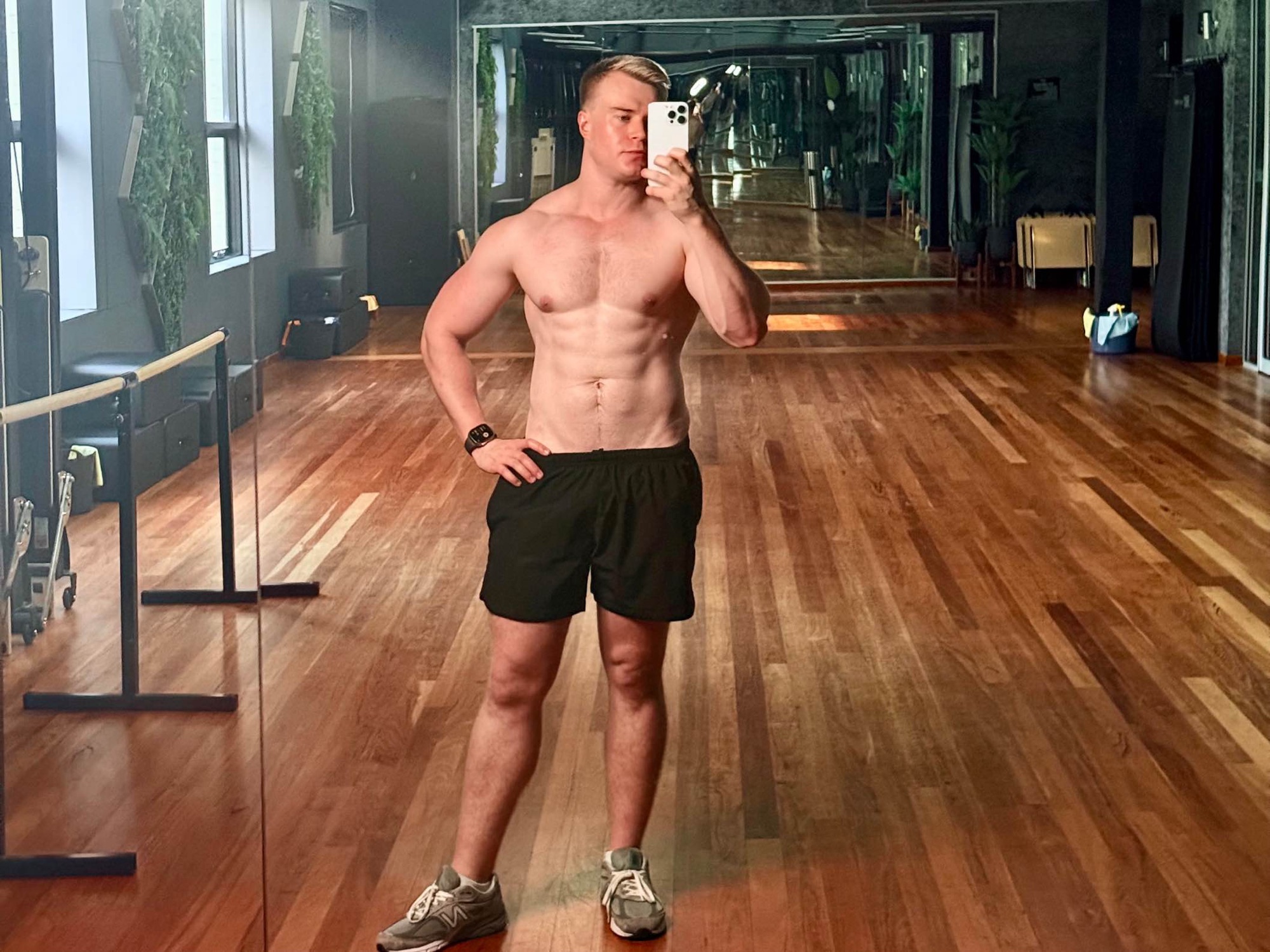
My approach is to find movement you enjoy and can maintain, with enough rest and recovery to support it. That might be strength training, walking, swimming or a mix that fits your life.
You don’t need to turn exercise into another beauty obligation. Its established benefits are already worth having. Any improvement in your skin is a welcome addition.
References
1. Charkoudian N. Skin blood flow in adult human thermoregulation: how it works, when it does not, and why. Mayo Clin Proc. 2003;78(5):603–12. doi:10.4065/78.5.603
2. Nishikori S, Yasuda J, Murata K, et al. Resistance training rejuvenates aging skin by reducing circulating inflammatory factors and enhancing dermal extracellular matrices. Sci Rep. 2023;13(1):10214. doi:10.1038/s41598-023-37207-9 Three authors are employees of POLA Chemical Industries, a cosmetics company.
3. Kredlow MA, Capozzoli MC, Hearon BA, et al. The effects of physical activity on sleep: a meta-analytic review. J Behav Med. 2015;38(3):427–49. doi:10.1007/s10865-015-9617-6
4. Singh B, Olds T, Curtis R, et al. Effectiveness of physical activity interventions for improving depression, anxiety and distress: an overview of systematic reviews. Br J Sports Med. 2023;57(18):1203–9. doi:10.1136/bjsports-2022-106195
5. Mills OH Jr, Kligman A. Acne mechanica. Arch Dermatol. 1975;111(4):481–3. PubMed 123732
6. Cancer Council Australia. Preventing skin cancer. cancer.org.au Accessed 21 October 2026.
Written by Dr Brandon Kober-Brown MBBS, ProfDipMensHlth, GCCM
Registered Medical Practitioner (General Registration) MED0002581903
Disclaimer: This article is intended for general educational purposes only and should not be taken as personal medical advice. It is not a substitute for a consultation with a registered medical practitioner. Check with your doctor before starting a new exercise programme if you have a medical condition.
