
Online
Private video call
FreeA conversation first, from wherever you are
Talk through what bothers you about your nose and whether non-surgical rhinoplasty is likely to be the answer. The assessment and treatment happen in clinic.
Skincare chosen by Dr Brandon. Delivered, or free click & collect at Potts Point.
Shop all products Triple Lipid Restore 2:4:2 Anti-Ageing Moisturiser
Lipid-replenishing cream for mature, depleted skin.
For women and men · Potts Point, Sydney
A better profile. No surgery, no recovery week.
A bump on the bridge, a tip that droops when you smile, a nose that sits a little off-centre or out of step with the chin. Non-surgical rhinoplasty refines the shape of the nose in about half an hour, with no general anaesthetic and no weeks of swelling, for women and men. It can’t do everything a surgeon can, and we’ll tell you honestly which you need. Every plan is set by a doctor.

Non-surgical rhinoplasty uses a prescription-only product, which Australian law doesn’t allow us to advertise or price online. What’s used, and what it costs, is discussed at your consultation, where it’s clinically appropriate.
How it works
By adding, never by taking away. Surgery reshapes the nose by removing and moving bone and cartilage. Non-surgical rhinoplasty leaves the structure alone and changes the line the eye reads.
Non-surgical rhinoplasty reshapes the nose by placing small amounts of a prescription-only product beneath the skin at precise points: above and below a bump so the profile reads straight, at the tip to lift or define it, along one side to even an asymmetry. It takes about 30 minutes, the result is visible straight away and settles over about two weeks, and it lasts around 12 to 18 months. It can’t make a nose smaller or fix breathing; those are surgical. It can be dissolved if needed. For women and men, and the first step is an honest assessment of whether your nose suits it.

A dorsal hump
The most common ask. A bump on the bridge can’t be shaved off without surgery, but the line above and below it can be raised so the profile reads straight. The nose is technically a fraction larger in profile; it looks smaller, because the eye no longer stops at the bump.
Droop, rotation and definition
A tip that hangs low, droops when you smile or looks rounded and soft. Support at the base of the nose lifts and rotates the tip a little; a small amount at the tip itself defines it. Lifting the tip also shortens how long the nose reads from the side.
Symmetry, and the rest of the face
A slight deviation or a flat, low bridge can be evened. And the nose is never assessed alone: a chin that sits back makes a nose look larger than it is, and sometimes the honest answer is the chin, through Beautification, with the nose left exactly as it is.
What it addresses
The profile is where it does its best work. Width and size are where it stops, and we say so.
A bump on the bridge, from the side and sometimes from the front. Smoothed into a straight line in one visit. The single most common reason people come.
A tip that hangs low, dips when you smile or lacks definition. Lifted and defined with support at the base and a little at the tip.
A nose that leans a little to one side, or a bridge that isn’t quite straight from the front. Mild cases can be evened; a marked deviation is surgical, and we’ll say so.
A bridge that sits low between the eyes, common in some ethnic noses, can be raised and defined so the nose reads with more structure from the side and the front.
A dip, a step or a scooped bridge left by a surgical rhinoplasty. Often improvable, always assessed carefully, because surgery changes the anatomy and the blood supply.
Sometimes the nose is fine and the chin is set back, which makes the nose read larger. The whole profile is assessed, and the honest answer is sometimes elsewhere.
Make a nose smaller or narrower, reduce wide nostrils, straighten a markedly deviated nose, or fix breathing and a deviated septum. Those are surgical, and if that’s what you need, surgery is the honest path. We’ll tell you so at the consultation and refer you to a surgeon rather than treat around it.
For women and men
Same technique, different noses and different asks. A man’s nose is usually larger, with a straighter, stronger bridge and a less lifted tip; refine it like a woman’s and it reads wrong. The plan is set for the face in front of us, not a template.
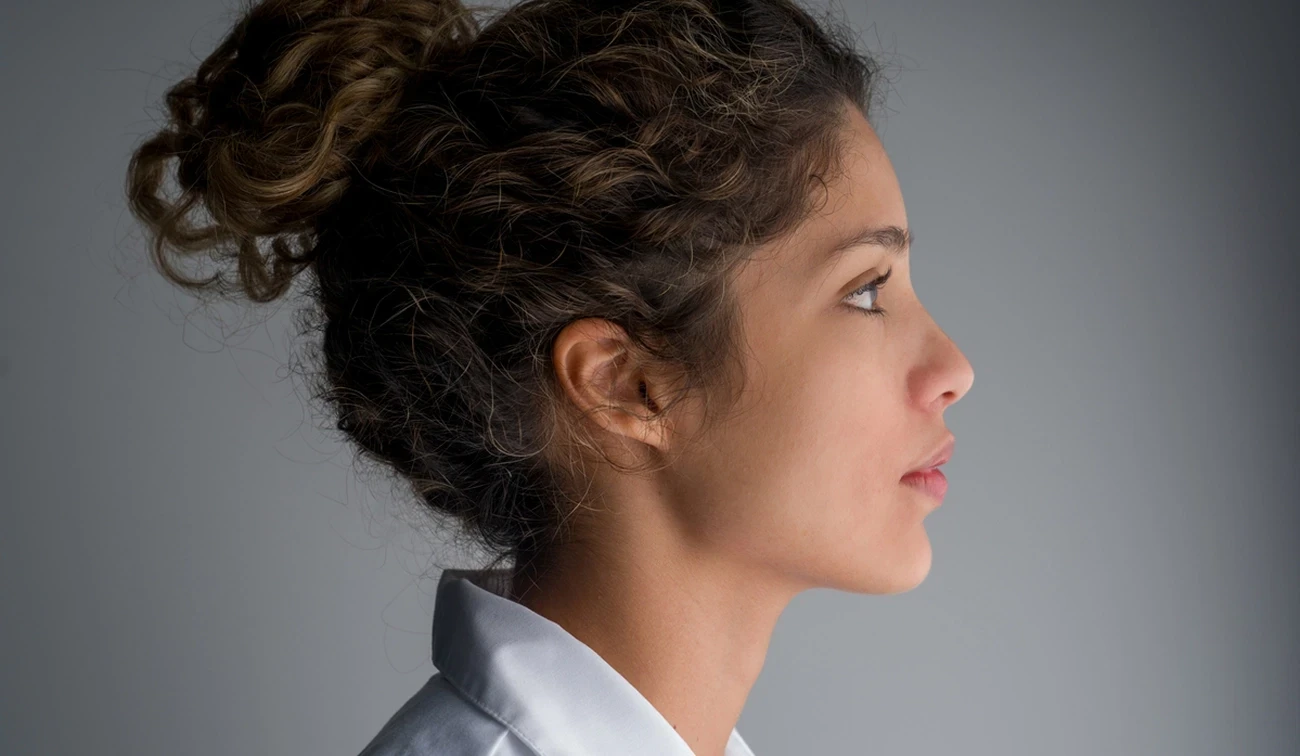
A straighter bridge from the side, a slightly lifted and defined tip, and a softer line between the brow and the tip. Often a nose that photographs better from the side without anyone noticing a change from the front. Lifted, not upturned.

A bump smoothed, a tip that doesn’t droop, a nose that sits straight after an old break, and nothing that looks done. The bridge stays strong and straight and the tip stays where a man’s tip sits. Men can book here, or through Male by Cleon.
Is this right for me?
Surgical vs non-surgical
Most people searching for a nose job in Sydney are weighing the two. Here is the honest comparison, including what only surgery can do.
| Factor | Non-surgical rhinoplasty | Surgical rhinoplasty | What it means for you |
|---|---|---|---|
| How long it lasts | About 12 to 18 months, then a top-up | Permanent | Non-surgical suits anyone not ready to commit for good |
| Recovery | A day or two of mild swelling; back to work the same day | A splint for a week, bruising for two, swelling for months | Non-surgical fits around a normal week |
| Can it make the nose smaller? | No. It adds; it can’t remove | Yes | If smaller is the goal, surgery is the honest path |
| Can it be reversed? | Yes. The product can be dissolved if needed | No. A revision is another operation | Non-surgical has a safety net; surgery doesn’t |
| What it can change | The profile: a hump, the tip, mild asymmetry, a low bridge | Structure, size, width, nostrils, the septum and breathing | Bigger structural concerns need a surgeon’s assessment |
| Where it’s done | In clinic, in about 30 minutes, with numbing cream | In hospital, under general anaesthetic | Non-surgical is an appointment, not an admission |
Both carry risks, and they’re different risks. Non-surgical rhinoplasty’s are rare but serious, which is why it’s planned by a doctor who knows the anatomy of the nose and performed under medical supervision. If we think surgery would serve you better, we’ll say so and refer you.
A doctor-led clinic
Because the nose is the one place on the face where the judgement matters most. Its blood supply runs close to the surface and connects to the vessels around the eye, which makes it the least forgiving area to treat. Where the product goes, how deep, how much, and the decision not to treat at all are what keep it safe. That’s why it’s planned by a doctor who knows the anatomy, performed under medical supervision, and never done from a menu.
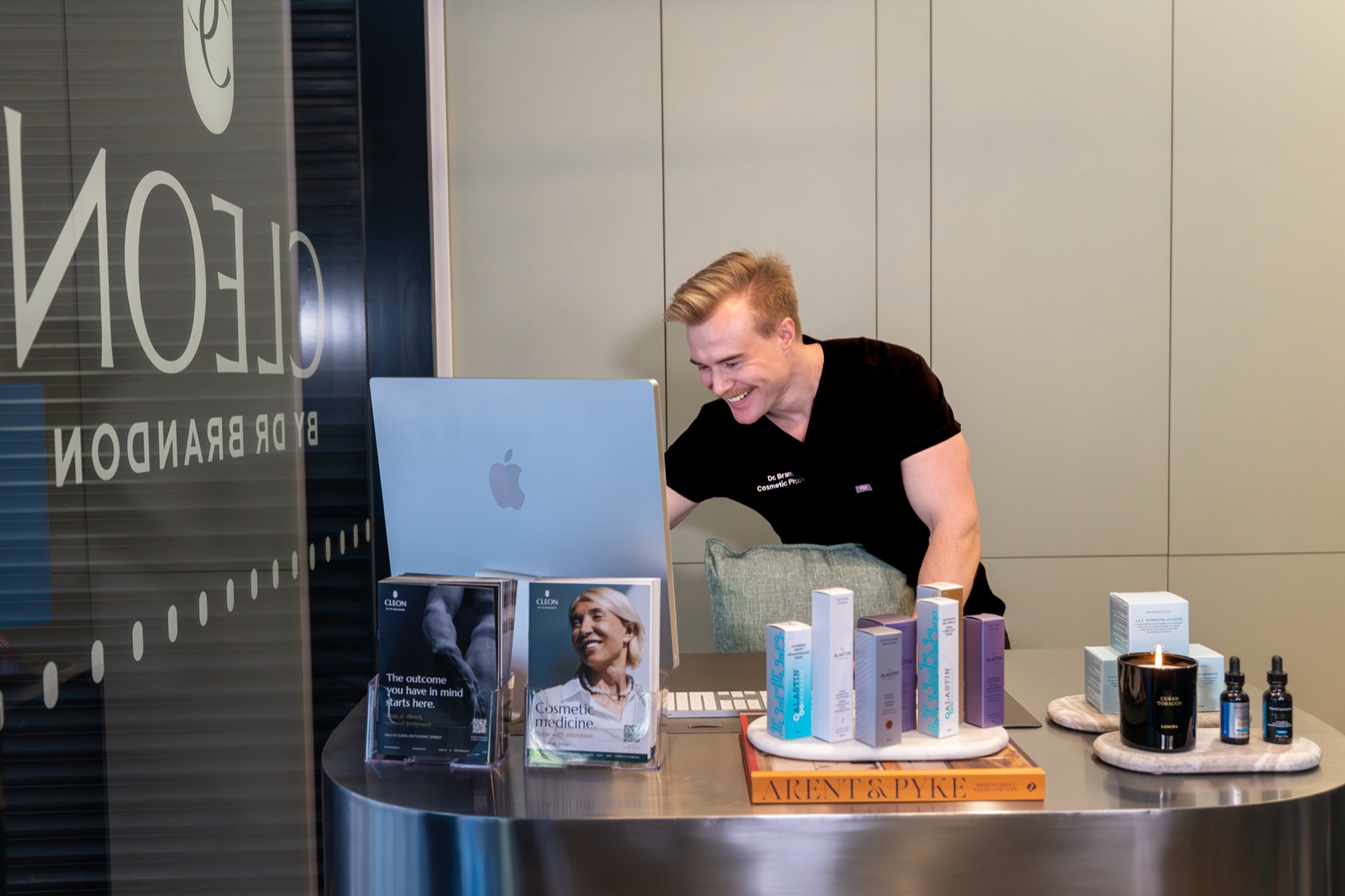
Cleon was founded by Dr Brandon, a cosmetic doctor. Not every nose is suited to this, and we don’t treat everyone who asks: candidacy is assessed first and expectations are set before anything is agreed. If surgery would serve you better, we’ll tell you so and refer you on.
What to expect
The conversation comes first. Then, if your nose suits it, the treatment itself is quick.
An hour face to face at Potts Point, or a free video call first. What bothers you about your nose, your medical history, any previous treatment or surgery, and your profile from every angle. Photos for your file. Then an honest answer on whether it suits you, the plan, and its price.
If it’s right for you, treatment can often follow at the same visit. Numbing cream goes on first. The treatment itself takes about 30 minutes, and you watch the shape change in the mirror as it’s done. Arrive make-up free if you can.
The result is there straight away. Mild swelling and redness settle over a day or two, and the final shape is clear by about two weeks. For 48 hours: no pressure on the nose, no heat, no hard exercise. Keep glasses off the bridge for the first week or two.
A review at about two weeks if it’s useful, with a small adjustment if needed. The result holds for around 12 to 18 months and fades gradually, not overnight. A top-up when you notice the change. Results are monitored, not assumed.
Recovery and timeline
There’s very little to recover from. The shape is there from the start, and this is roughly how the next year goes.
Normal activities the same day. No pressure on the nose, heat or hard exercise for 48 hours.
Pricing
The honest answer is that it depends on your nose, and Australian law doesn’t allow prescription-only products, or their prices, to be advertised. So the treatment is priced at your consultation, after we’ve confirmed it suits you and before anything goes ahead. The consultation itself is priced plainly.
Online
FreeA conversation first, from wherever you are
Talk through what bothers you about your nose and whether non-surgical rhinoplasty is likely to be the answer. The assessment and treatment happen in clinic.
In clinic
$100Comes off your treatment if it’s done on the day
An hour at our Potts Point clinic. Your nose and profile are assessed, you get an honest answer on whether it suits you, the plan is set and priced, and treatment can often follow at the same visit.
Non-surgical rhinoplasty is cosmetic, so there’s no Medicare rebate. Men can also book through Male by Cleon. All pricing.
Frequently asked
Non-surgical rhinoplasty is part of Beautification for women and Appearance for men. Anything else, ask at your consultation or email hello@cleonclinic.com.
A way of reshaping the nose without surgery. Small amounts of a prescription-only product are placed beneath the skin at precise points to straighten the profile, lift or define the tip, or even an asymmetry. It takes about 30 minutes, the result is visible straight away, and it lasts around 12 to 18 months. At Cleon it’s planned by a doctor after an honest assessment of whether your nose suits it.
Yes. Non-surgical rhinoplasty, liquid rhinoplasty, a liquid nose job, non-surgical nose reshaping and nose filler all describe the same treatment. What’s used is a prescription-only product, which can’t be named or priced in advertising in Australia, so it’s discussed at your consultation.
By adding structure where it changes the line the eye reads, never by taking anything away. Above and below a bump, so the bridge reads straight. At the base and tip, to lift and define. Along one side, to even an asymmetry. The nose’s bone and cartilage are untouched, which is why there’s no real recovery and why the result can be dissolved if needed.
No. Most people arrive with an outcome in mind: a straighter profile, a tip that doesn’t droop. The consultation works out whether non-surgical rhinoplasty will get you there, and tells you plainly if it won’t. We refer on when surgery would serve you better.
No. The treatment adds; it can’t remove. A bump can be made to look smaller because the profile reads straight, and a lifted tip makes the nose read shorter, but the nose itself isn’t reduced. If making the nose smaller or narrower is the goal, surgery is the honest path, and we’ll say so.
In most cases, yes, and it’s the most common reason people come. The line above and below the bump is raised so the profile reads straight. It’s visible the same day. The consultation confirms what’s achievable for your nose.
Often, yes. Support at the base of the nose lifts and rotates the tip a little, and a small amount at the tip defines it. A tip that droops when you smile can also be helped by relaxing the muscle that pulls it down, which is discussed at the consultation. A very heavy or long tip is better served by surgery.
Mild asymmetry and a slight deviation can be evened by building up the side that sits lower. A nose that’s markedly crooked, or bent after a break, is structural and needs a surgeon. Which yours is becomes clear at the consultation.
Not really. Width is set by bone and cartilage, and only surgery changes it. Raising a low bridge can make a nose read narrower from the front, which helps some people, but if width is the main concern, surgery is the honest answer.
No. Non-surgical rhinoplasty changes the outside of the nose only. Breathing problems and a deviated septum need an ear, nose and throat surgeon or a rhinoplasty surgeon, and we’ll refer you. Treatment outside the nose doesn’t make breathing worse, but it’s assessed first.
Usually 12 to 18 months, sometimes longer in the nose because it moves less than the rest of the face. It depends on the product, the area and you. It fades gradually rather than overnight, and a top-up usually needs less than the first treatment.
Yes. If the result isn’t what you wanted, or ever needs to go, the product can be dissolved in clinic. It’s one of the real advantages over surgery, and the reason some people use it to see a shape before deciding on an operation.
Numbing cream goes on first, and the product itself contains a local anaesthetic. Most people describe pressure and a few brief stings over about half an hour, and say it’s easier than they expected.
Very little. Mild swelling and redness for a day or two, and sometimes a small bruise that make-up covers. Most people go back to work the same day. The final shape is clear by about two weeks.
For 48 hours: no pressure on the nose, no rubbing, no heat, saunas or hard exercise, and no make-up on the treated area. Keep glasses and sunglasses off the bridge for the first week or two; contact lenses are fine. Sleep on your back for the first couple of nights if you can. After that, nothing is off limits.
Done properly, it’s a quick in-clinic treatment with a good safety record, but the nose is the highest-risk area on the face to treat, and we won’t pretend otherwise. Common and minor: swelling, redness, tenderness, a small bruise. Uncommon: unevenness or a small lump, which can be adjusted or dissolved. Rare but serious: the product entering or pressing on a blood vessel, which can damage the skin and, very rarely, affect vision. That risk is why it’s planned by a doctor who knows the anatomy, placed carefully, performed under medical supervision, and why some noses are turned down. The full list, and what applies to you, is part of your consultation. If you ever notice severe pain, skin turning white or mottled, or any change in your vision after treatment, contact us immediately, or call 000.
Possibly, and it’s a common reason to come: a dip, a step or a scooped bridge after surgery can often be improved. But surgery changes the anatomy and the blood supply, so it’s assessed carefully in person, and sometimes the answer is a surgical revision instead.
Yes. Nothing is changed structurally, and the product is absorbed over time or can be dissolved first. Some people use non-surgical rhinoplasty to preview a shape before committing to an operation. Tell your surgeon what was done and when.
Measured, it’s a fraction larger in profile, because something has been added. Seen, it looks smaller and straighter, because the eye no longer stops at the bump or the droop. The plan uses the least amount that makes the line read right; adding more is how noses start to look heavy.
That’s the aim, and the reason for restraint. A good result is a nose that no one notices, in a profile that looks better in photos. The nose is planned with the chin, the brow and the rest of the face, not on its own.
Yes, and more men ask every year, usually about a bump or a nose that sits crooked after an old break. A man’s nose is planned differently: a strong, straight bridge, a tip that isn’t over-lifted, and nothing that looks done. Men can book this page’s consultation or go through Male by Cleon. Either way, it’s private.
Any adult whose nose has finished growing, which is usually by the late teens. Under 18, we don’t treat. There’s no upper age; skin and structure are assessed, not a number.
We wait. It hasn’t been studied in pregnancy or breastfeeding, so we don’t treat during either. Your nose will still be there afterwards, and so will we.
It depends on your nose and the plan, and Australian law doesn’t allow prescription-only products or their prices to be advertised, so it’s priced at your consultation, before anything goes ahead. The in-clinic consultation is $100, which comes off your treatment if it’s done on the day. A video call first is free. There’s no Medicare rebate.
Because the treatment uses a prescription-only product, and Australian law prohibits advertising those to the public, including their prices. We price it plainly at your consultation, after we’ve confirmed your nose suits the treatment, and the consultation fee is on this page.
Often, yes. If the consultation finds your nose suits it and nothing needs checking first, treatment can follow at the same visit, and the $100 consultation fee comes off it. If you’d rather think about it, that’s fine too.
At least two weeks, so any swelling has settled and the final shape is clear. For a first treatment, three to four weeks ahead is better, so there’s time for a review and a small adjustment if needed.
Second opinions are common. Bring what you know about what was used and when. If the shape is wrong, it can usually be adjusted or dissolved and started again; an ultrasound assessment can show what’s there and where. The focus is on what you’d like instead, not on what went wrong.
A doctor assesses every nose and sets every plan. Treatment is performed by our clinical team under medical supervision, in a doctor-led clinic, and reviewed at about two weeks. Results are monitored, not assumed.
Yes. A free private video call is a good first step: we talk through what bothers you and whether non-surgical rhinoplasty is likely to help. The assessment in person, and the treatment, happen in clinic at Potts Point.
Cleon by Dr Brandon is at Ground 02, 46a Macleay Street, Potts Point, a short walk from Kings Cross station and easy to reach from the city, Darlinghurst, Elizabeth Bay, Woolloomooloo and the eastern suburbs. We see women and men face to face in clinic, with free online consultations for patients across Sydney.
Book a consultation. It’s the first step, and the only one you need to take today. Not sure whether your nose suits it? That’s what the consultation is for.
Book a consultation
Face to face at our Potts Point clinic, or a free video call first. Your nose is assessed honestly by a doctor, and nothing happens without your agreement.
What patients say about Cleon

Dr Brandon is warm, approachable and professional and a very kind and caring doctor.
I've just visited Cleon by Dr Brandon in his new state of the art premises in the "Post" building. It's very impressive and Dr Brandon provides a first-class service.
Such a great clinic led by Dr Brandon! Highly recommend!!

Choose your consultation type and follow the prompts to choose a time that works for you.