

Sunscreen: The Foundation of Any Anti-Ageing Skincare Routine
Before spending money on another serum, I would ask one question: are you using sunscreen consistently?
Retinoids and other skincare ingredients have their place. But if your goal is to look after your skin over time, protecting it from ongoing sun damage needs to be part of the plan.
Sunscreen isn’t the only product with evidence behind it, but it is a foundation I wouldn’t overlook. An Australian randomised trial found less visible skin ageing in people who used sunscreen daily than in those who used it at their own discretion.1
You don’t have to burn to damage your skin
Sun exposure doesn’t just mean a day at the beach. Walking to work, sitting outside for lunch and spending time in the car can all contribute to your exposure.
UVB is the main cause of sunburn. UVA penetrates more deeply and contributes to the changes we associate with sun damage, including wrinkles and loss of elasticity.2 Both contribute to skin cancer risk, which is why broad-spectrum protection matters. It covers both UVA and UVB.
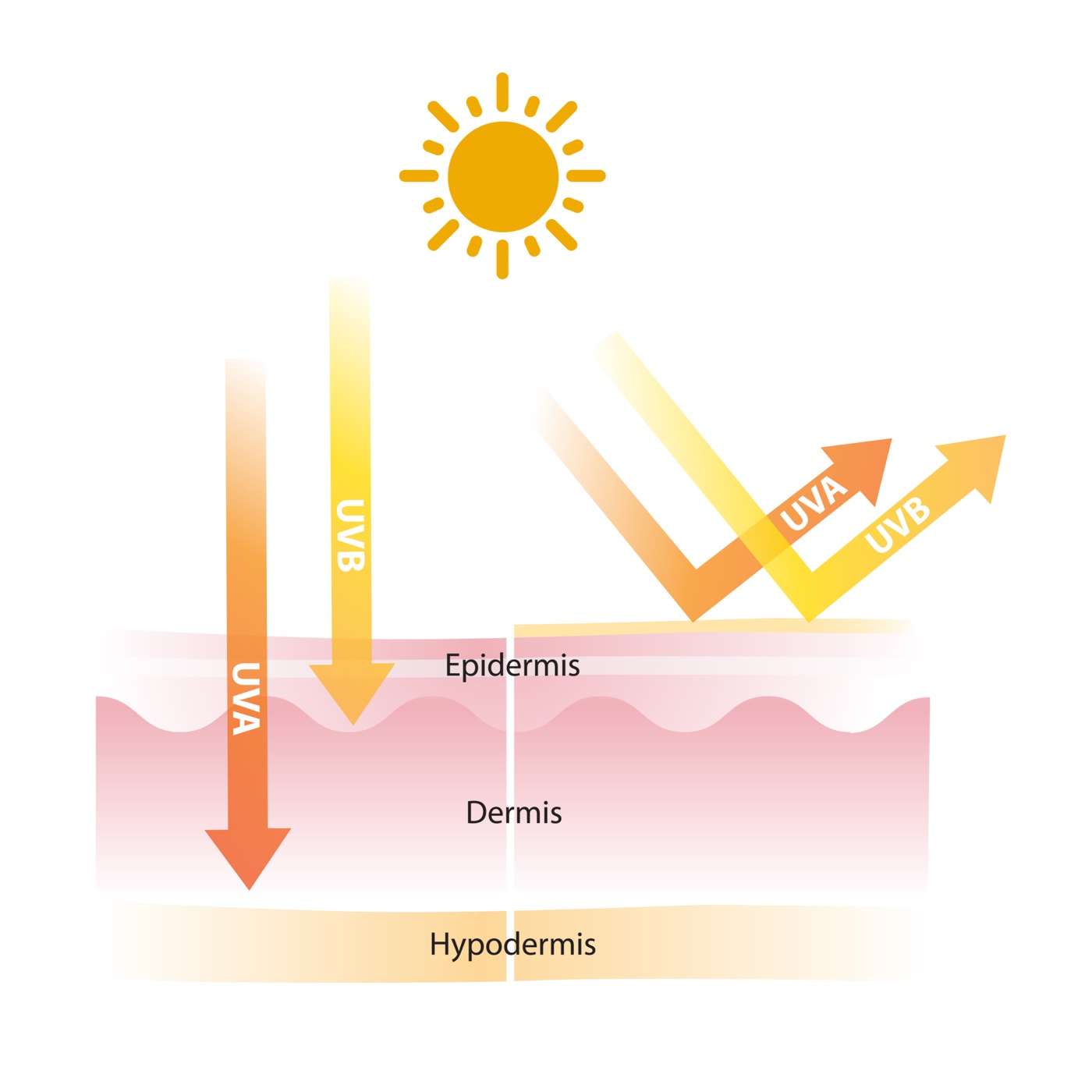
The absence of a sunburn doesn’t mean your skin hasn’t been exposed to damaging UV. And the temperature isn’t a reliable guide either. A cool or cloudy day can still require sun protection.
In Australia, Cancer Council recommends sun protection when the UV Index is 3 or above.3 Checking the UV forecast is more useful than deciding whether the weather feels sunny enough.
Chemical or mineral?
Both can provide effective protection. I would focus on finding a broad-spectrum SPF 50 or 50+ sunscreen that you tolerate and are happy to apply generously. Choose a water-resistant formula for outdoor use.4
Mineral sunscreens use zinc oxide, titanium dioxide or both. You’ll often hear that they work by reflecting UV while chemical filters absorb it. In reality, mineral filters also provide most of their UV protection through absorption.5 They aren’t simply a reflective shield sitting on your face.
The overall formula matters. If a sunscreen stings, feels unpleasant or leaves a finish you dislike, try another option. The aim is to find something you can comfortably make part of your routine.
The amount matters more than people realise
A small dab spread across your face won’t provide the protection stated on the bottle.
For an average adult, the recommended amount is approximately one teaspoon for the face, neck and ears combined. A full-body application takes around seven teaspoons, or 35 mL.6 That includes one teaspoon for each arm, each leg, the front of the torso, the back, and the face, neck and ears.
Apply it to clean, dry skin about 20 minutes before going outside, following the product directions. Reapply every two hours while outdoors, and after swimming, heavy sweating or towelling.6 Water-resistant doesn’t mean waterproof.
Do you need it indoors?
This needs a little context.
Some UVA can pass through window glass, although the amount depends on the type of glass and any protective coating.7 Spending hours beside a sunny window or driving regularly is different from working well away from windows. Being indoors doesn’t automatically mean zero exposure, but it also doesn’t mean you’re receiving the same exposure as someone outside.
I like a morning sunscreen habit because it makes everyday protection easier. Most people don’t plan every moment they’ll spend outdoors. Just remember that a morning application isn’t an all-day pass, particularly if you head outside later.
Sunscreen is one part of protection
No sunscreen blocks all UV.4 A hat, sunglasses, protective clothing and shade still matter. Sunscreen should support those measures, rather than give you a reason to stay in the sun longer.
And while this article is about visible ageing, reducing skin cancer risk is the more important reason to protect your skin.8
There’s nothing wrong with getting older. My approach is about looking after your skin as it changes, with realistic expectations about what skincare can achieve.
You don’t need an elaborate routine to start. Find a sunscreen you like, use enough of it and make sun protection a habit. I would get that right before worrying about the next expensive serum.
Sunscreens we stock
These are the sunscreens we stock at Cleon. Each one links to its page in our shop.
Anthelios UVMUNE 400 Ultra Invisible Fluid SPF 50+ → La Roche-Posay · For the face. Ultra-light, with long-UVA protection.
Anthelios Invisible Fluid Facial Sunscreen SPF 50+ → La Roche-Posay · For the face. Invisible and fast-absorbing.
Anthelios Tinted Fluid Sunscreen SPF 50+ → La Roche-Posay · For the face. Tinted, with a natural finish.
Ultra Facial Defense Sunscreen SPF50 → SkinCeuticals · For the face. A lightweight daily sunscreen.
Anthelios Invisible Spray Sunscreen SPF 50+ → La Roche-Posay · For the body. An invisible spray for easy coverage.
Anthelios Wet Skin Body Sunscreen SPF 50+ → La Roche-Posay · For the body. Goes on even when your skin is wet.
Anthelios UVMUNE 400 Ultra Invisible Kids Fluid SPF 50+ → La Roche-Posay · For children. Gentle, with high protection.
References
1. Hughes MCB, Williams GM, Baker P, Green AC. Sunscreen and prevention of skin aging: a randomized trial. Ann Intern Med. 2013;158(11):781–90. doi:10.7326/0003-4819-158-11-201306040-00002
2. D’Orazio J, Jarrett S, Amaro-Ortiz A, Scott T. UV radiation and the skin. Int J Mol Sci. 2013;14(6):12222–48. doi:10.3390/ijms140612222
3. Cancer Council Australia. UV Index. cancer.org.au Accessed 21 October 2026.
4. Cancer Council Australia. All about sunscreen and sun safety. cancer.org.au Accessed 21 October 2026.
5. Cole C, Shyr T, Ou-Yang H. Metal oxide sunscreens protect skin by absorption, not by reflection or scattering. Photodermatol Photoimmunol Photomed. 2016;32(1):5–10. doi:10.1111/phpp.12214 One author from Johnson & Johnson, which makes sunscreens.
6. Cancer Council Australia. Preventing skin cancer. cancer.org.au Accessed 21 October 2026.
7. Tuchinda C, Srivannaboon S, Lim HW. Photoprotection by window glass, automobile glass, and sunglasses. J Am Acad Dermatol. 2006;54(5):845–54. doi:10.1016/j.jaad.2005.11.1082
8. Green AC, Williams GM, Logan V, Strutton GM. Reduced melanoma after regular sunscreen use: randomized trial follow-up. J Clin Oncol. 2011;29(3):257–63. doi:10.1200/JCO.2010.28.7078

Written by Dr Brandon Kober-Brown MBBS, ProfDipMensHlth, GCCM
Registered Medical Practitioner (General Registration) MED0002581903
Disclaimer: This article is intended for general educational purposes only and should not be taken as personal medical advice. It is not a substitute for a consultation with a registered medical practitioner. Check any new or changing spot or mole with your doctor.
