
Online
Private video call
FreeA conversation first, from wherever you are
Talk through your hair loss, what’s likely to help, and whether you need to come in. The scalp examination happens in clinic.
Skincare chosen by Dr Brandon. Delivered, or free click & collect at Potts Point.
Shop all products Triple Lipid Restore 2:4:2 Anti-Ageing Moisturiser
Lipid-replenishing cream for mature, depleted skin.
Hair loss treatment · Male by Cleon
Treatment where the thinning is.
Scalp mesotherapy places a small dose of treatment just under the skin, exactly where your hair is thinning. Far less reaches the rest of your body than with a daily tablet, so sexual side effects are less likely. At Male by Cleon in Potts Point, it starts with a proper assessment, then three sessions a month apart and one every three months to keep the result.
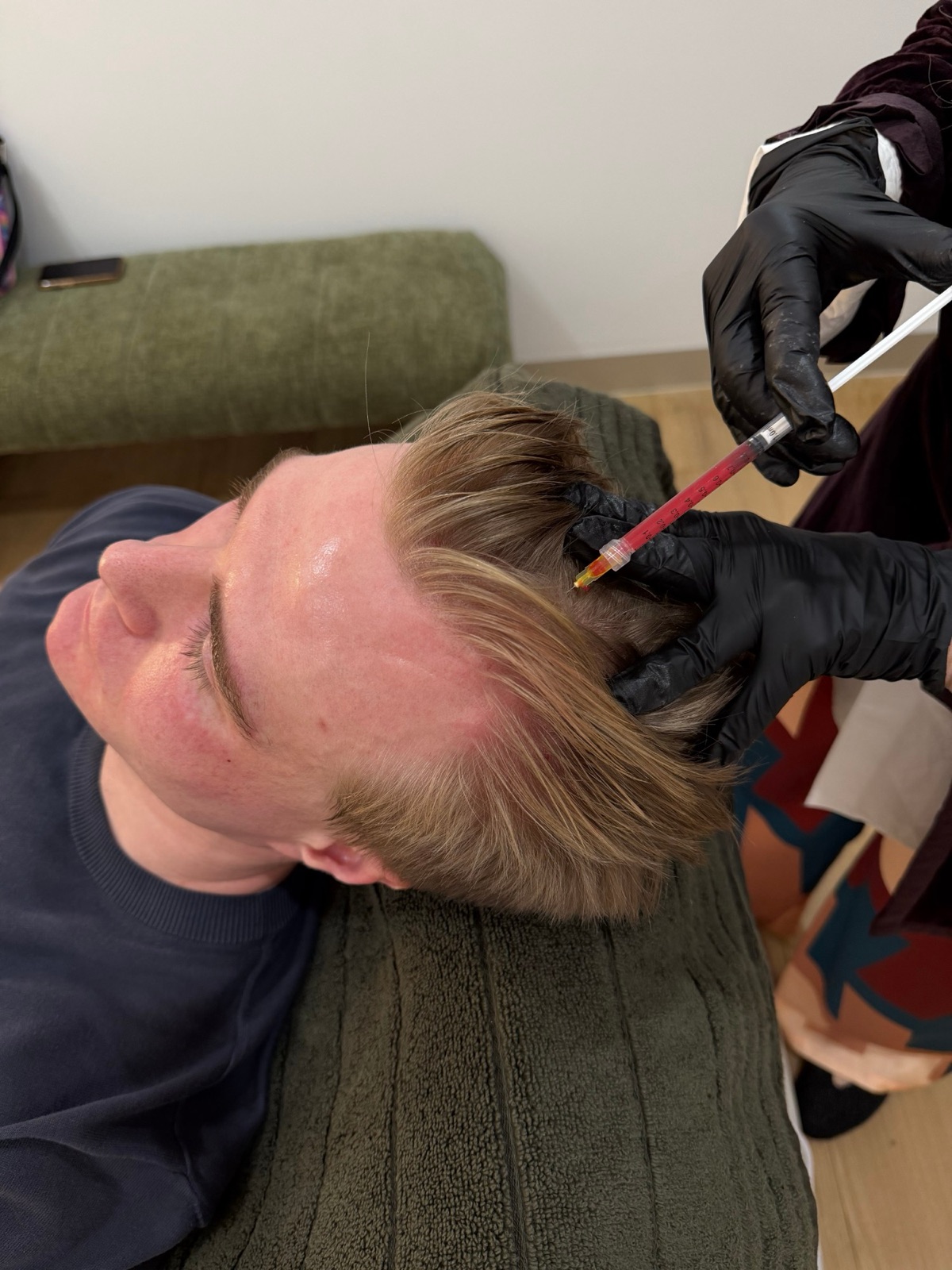
Scalp mesotherapy uses prescription medicine prescribed off-label, which Australian law doesn’t allow us to advertise to the public. It’s discussed with you during a consultation, and offered only where it’s clinically appropriate. Outcomes vary between individuals.
How common is it?
Male pattern hair loss is the most common reason men’s hair thins. It runs in families, follows a pattern, and carries on unless it’s treated. Treatment works on hair that’s still there, so the earlier you start, the more there is to keep.
What’s happening
Genes and hormones, mostly. In men with the inherited tendency, hair follicles on the top and front of the scalp are sensitive to androgens, the male hormones. Over years they shrink, and each new hair grows back finer and shorter. It isn’t caused by hats, washing your hair or wearing it short.
Follicles at the back and sides of the scalp aren’t sensitive in the same way. That’s why pattern hair loss leaves a horseshoe of hair, and why a hair transplant takes its hair from there.
At the temples and the hairline, at the crown, or across the top. Some men have one, many have more than one, and the pattern tends to run in families.
Sudden or heavy shedding can follow illness, stress, a crash diet, low iron or a thyroid problem, and patchy loss can be alopecia areata. Each is treated differently, so we check first.
The treatment
A course of fine, shallow injections that place a small dose of treatment into the scalp, right where the follicles are thinning, rather than a tablet that goes through your whole body every day.
Scalp mesotherapy is a course of fine, shallow injections that place a small dose of treatment into the scalp where hair is thinning. Far less reaches the rest of the body than with a daily tablet, so sexual side effects are less likely. At Male by Cleon in Potts Point, Sydney, it’s used for male pattern hair loss after a doctor-led assessment: three sessions a month apart, then one every three months to maintain the result. Each session takes about 30 minutes, with about a day of downtime. A consultation is $100 in clinic, or start with a free video call. For the price of treatment, ask us at your consultation or get in touch.
Your hair loss is diagnosed before anything is planned. Not every thinning scalp needs the same treatment.
Numbing first, so the session is comfortable. Most men feel quick pinpricks and little else.
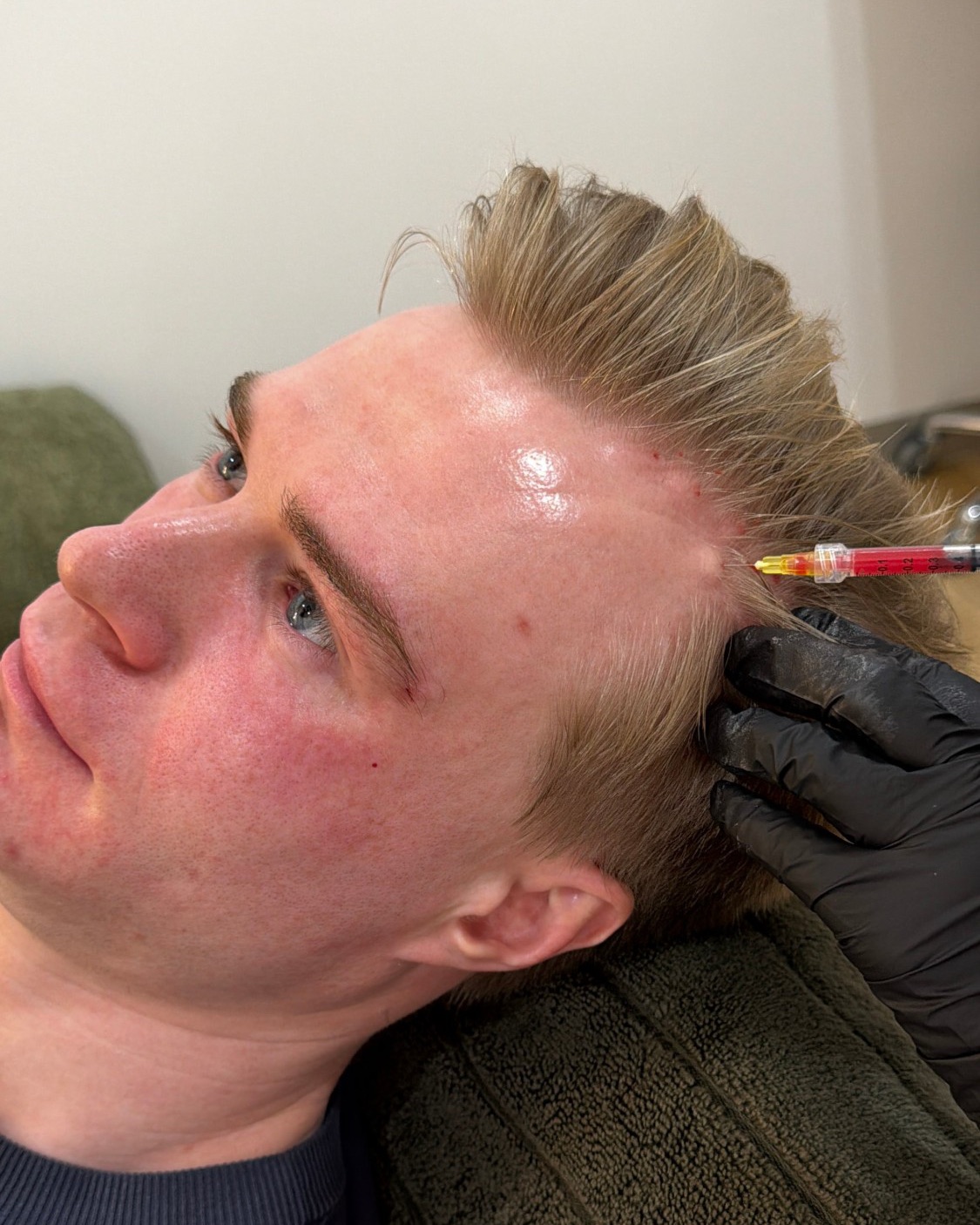
Fine injections in a close grid over the areas that are thinning: the hairline, the top, the crown.
A small dose in the scalp a few times a year, not a tablet every day. Sexual side effects are less likely than with daily tablets, though rare isn’t never.
The medicine used is prescribed off-label and can’t be advertised, so it’s explained at your consultation, before anything starts. It can be combined with PRP in the same visit.
About 30 minutes in the chair, then a session every three months. Small bumps and redness usually settle within a day.
Scalp mesotherapy uses prescription medicine, prescribed off-label for hair loss. Australian law doesn’t allow us to advertise prescription-only medicines to the public, so we can’t name it here. We’ll go through it with you during your consultation: what it is, why we’d use it, its risks, and what to expect.
Mesotherapy is a well-established technique, but the research behind it for hair loss is still early: mostly small studies, using different formulations and schedules. It’s promising, not settled. That’s why we photograph your scalp before you start and judge the result on your own photos, at six and twelve months.
Who it’s for
Male pattern hair loss, wherever it shows. It works on follicles that are still growing hair, even fine hair.
Thinning at the temples and the front. Caught early, there’s more hairline to keep.
The spot you mostly notice in photos, or under the lights in a lift mirror.
Diffuse thinning across the top, where the scalp starts to show in bright light.
A hairline that’s moving, or more scalp than there used to be. The best time to start.
A transplant moves hair. It doesn’t stop the hair around it thinning. Timed with your surgeon’s advice.
A small dose in the scalp instead, with far less reaching the rest of your body, so sexual side effects are less likely.
It won’t regrow hair on smooth, shiny skin where the follicles have gone. If that’s where you are, we’ll talk honestly about other options, including a referral for a hair transplant.
Is this right for me?
Why Cleon
Because the assessment matters as much as the treatment. Every plan is set by a doctor, and sessions are performed by our clinical team under medical supervision.
Compare
Two in-clinic treatments for pattern hair loss, and often used together. Here’s how they differ.
| Compared | Scalp mesotherapy | PRP | Both |
|---|---|---|---|
| What’s used | A prescription medicine, used off-label and discussed in consultation | Concentrated platelets from your own blood | Both, in the same visit |
| Blood draw | No | Yes, on the day | One, for the PRP |
| In the chair | About 30 minutes | About an hour | A little over an hour |
| To start | Three, a month apart | Three, a month apart | Three, a month apart |
| Then | One every three months | Every three to six months | Planned with you |
| Downtime | About a day | About a day | About a day |
| Price | Ask us | From $900 a session | Ask us |
Neither is right for everyone. We’ll recommend one, the other or both, based on your assessment. More about PRP.
What to expect
The conversation comes first. Nothing is sold or started until you’ve had time to think.
An hour, in its own appointment time: your history, the family pattern, your scalp examined up close and photographed. Blood tests if shedding suggests another cause.
Three sessions, a month apart. Each takes about 30 minutes, with numbing first.
One session every three months, for as long as you want to keep the result.
Photos from the same angles at six and twelve months. Results are monitored, not assumed.
Online
FreeA conversation first, from wherever you are
Talk through your hair loss, what’s likely to help, and whether you need to come in. The scalp examination happens in clinic.
In clinic
$100Comes off your treatment if it’s done on the day
An hour at our Potts Point clinic, in its own appointment time. For the price of scalp mesotherapy, ask us at your consultation, or get in touch on 0438 163 638 or at hello@cleonclinic.com.
Hair loss treatment isn’t covered by Medicare or private health insurance. All pricing.
Our founder
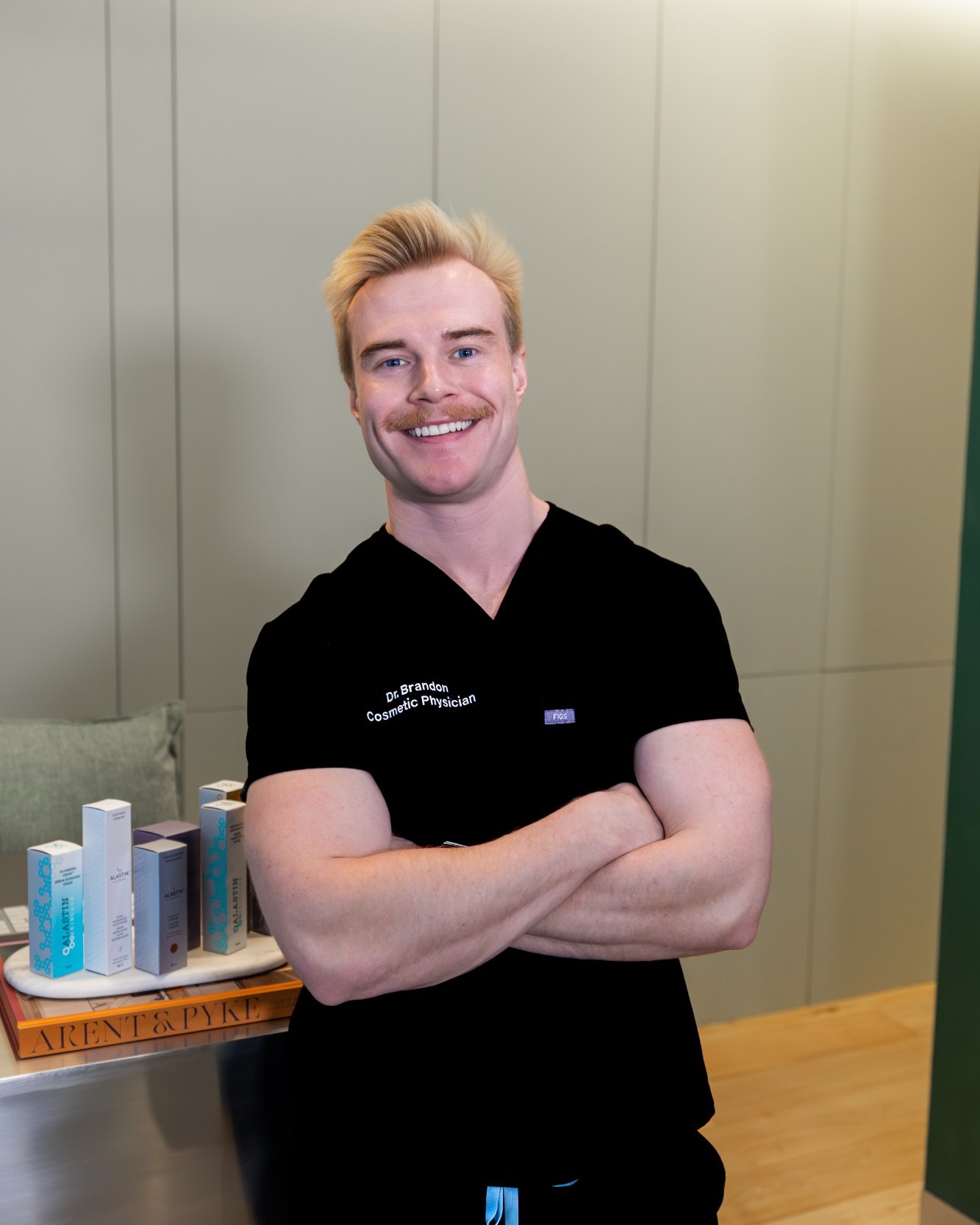
Male by Cleon was founded by Dr Brandon Kober-Brown, a cosmetic doctor with a Professional Diploma of Men’s Health. Every hair plan is set by a doctor, after a proper assessment, and treatments are performed by our clinical team under medical supervision.
Hair loss is ordinary medicine to us. You’ll be told what’s likely to help, what won’t, and when something else is going on.
Dr Brandon Kober-Brown, founderMBBS · GCCM · ProfDip Men’s Health · AHPRA MED0002581903Member, Cosmetic Physicians College of Australasia

Frequently asked
Scalp mesotherapy is part of Hair at Male by Cleon, alongside PRP. For women, see Hair at The Clinic. Anything else, ask at your consultation or email hello@cleonclinic.com.
A course of fine, shallow injections that place a small amount of treatment into the scalp, exactly where hair is thinning. It’s used for male pattern hair loss, usually as three sessions a month apart, then one every three months.
It can help, especially when thinning is caught early. The research is still early, though: mostly small studies, with different formulations and schedules, so it’s promising rather than settled. We photograph your scalp before you start and judge the result at six and twelve months, so you can see for yourself.
A prescription medicine, prescribed off-label for hair loss. Australian law doesn’t allow prescription-only medicines to be advertised to the public, so we can’t name it here. We’ll go through it with you during your consultation: what it is, why we’d use it, its risks, and whether it suits you. It can be combined with PRP from your own blood.
That a medicine is prescribed for a use other than the one it’s registered for. Off-label prescribing is legal and common in medicine, when a doctor judges it appropriate and you’ve agreed to it after hearing the benefits, the risks and the alternatives. We’ll talk it through with you at your consultation.
Usually three, a month apart, to start, then one every three months to maintain the result. Pattern hair loss doesn’t stop on its own, so treatment carries on for as long as you want to keep the benefit.
Hair grows slowly, about a centimetre a month, so change takes time. We take a first proper look at about six months, and the full picture at twelve, comparing photos taken from the same angles.
The scalp is numbed first. Most men describe quick pinpricks that are easy to manage, and the session takes about 30 minutes.
Very little. You may have small bumps, redness or tenderness for about a day, and now and then a small bruise. Most men go straight back to work. We’ll ask you to leave your hair unwashed, and skip hard exercise and swimming, for the rest of the day.
Side effects are usually mild: tenderness, redness, small bumps and the odd bruise, which settle within days. Less often there’s a headache, or an infection or reaction where the scalp was treated. Because far less reaches the rest of the body, sexual side effects are less likely than with daily tablets. Your medical history is checked first, and treatment is performed in clinic under medical supervision.
They’re less likely than with daily hair loss tablets. A small dose is placed in the scalp a few times a year, rather than taken every day, so far less reaches the rest of the body, and in studies so far sexual side effects have been rare. Rare isn’t never, so we go through it with you before you start, and you can tell us at any review.
Yes. Scalp mesotherapy and PRP are both done in clinic, a few times a year once the starting course is done. Many men choose them because they’ve had side effects from tablets, or would rather not take something every day. Whether they replace or sit alongside what you’re doing now is decided at your consultation.
They’re different. Scalp mesotherapy places a treatment chosen for you into the scalp; PRP uses concentrated platelets from your own blood. Neither is better for everyone, and many men do best with both. We’ll recommend one, the other or both, based on your assessment.
Yes. Both can be done in the same visit, with one blood draw for the PRP. It’s a common way to treat more established thinning.
Yes. Both take about half an hour, so they finish around the same time. Every drip is prescribed by a doctor after a health check. More on IV drip therapy.
It aims to hold the hair you have at the hairline and help thinning hair look thicker. It can’t regrow hair where the follicles have gone, so smooth, shiny skin at the temples usually stays that way. If that’s the concern, we’ll talk honestly about other options, including a hair transplant referral.
Not on fully bald, smooth areas. It works on follicles that are still producing hair, even fine hair. The earlier you start, the more there is to keep.
Pattern hair loss carries on, and over the following months the benefit fades. That’s true of every hair loss treatment, not just this one. Maintenance every three months is what keeps the result.
Often, yes. A transplant moves hair, but the hair around it can keep thinning, and scalp mesotherapy aims to protect it. We’ll time it with your surgeon’s advice.
Very. In an Australian study of 1,390 men aged 40 to 69, about one in three had thinning at the front only, at every age, and thinning at the crown rose from 31% of men aged 40 to 55 to 53% of men aged 65 to 69.1
Genes and hormones. In men with the inherited tendency, follicles on the top and front of the scalp are sensitive to androgens, the male hormones. Over successive growth cycles they shrink and grow finer, shorter hairs, until some stop producing visible hair. The back and sides are usually spared.
Usually not. Sudden or heavy shedding can follow illness, stress, a crash diet, low iron or a thyroid problem, and patchy loss can be alopecia areata. They’re treated differently, so we check for them first.
Some women can, for pattern hair loss. Whether it suits you depends on your hair loss, your health and your plans for pregnancy, which we go through first. Women book through The Clinic: see Hair at The Clinic.
No. You can book directly, or start with a free video call.
Ask us. We’ll go through the cost at your consultation, or get in touch on 0438 163 638 or at hello@cleonclinic.com and we’ll tell you before you book. A Male by Cleon consultation is $100, which comes off your treatment if it’s done on the day, and a video call is free. Hair loss treatment isn’t covered by Medicare or private health insurance.
Male by Cleon is at Ground 02, 46a Macleay Street, Potts Point, a short walk from Kings Cross station and close to Elizabeth Bay, Darlinghurst, Rushcutters Bay, Woolloomooloo and the CBD. If you’re further away, start with a free video call.
Book a private consultation
Online, or face to face at Potts Point. Every plan is set by a doctor, and nothing happens without your agreement.
The evidence
The study behind the figures on this page. Last reviewed October 2026.
Treatment outcomes vary between individuals. Information on this page is general and not a substitute for medical advice.
What patients say about Cleon

Dr Brandon is warm, approachable and professional and a very kind and caring doctor.
I've just visited Cleon by Dr Brandon in his new state of the art premises in the "Post" building. It's very impressive and Dr Brandon provides a first-class service.
Such a great clinic led by Dr Brandon! Highly recommend!!

Choose your consultation type and follow the prompts to choose a time that works for you.