

Cosmetic Treatments for Men in Sydney: There’s More to Discuss Than You Think
Cosmetic medicine is still largely marketed to women. Look at most clinic websites or social media accounts and you could easily assume men are an afterthought.
But the range of concerns men can seek help with is much broader than a few forehead lines or a receding hairline. Alongside facial aesthetics and skin treatments, there are conversations about hair preservation, body shape, excessive sweating and intimate health that many men don’t realise they can have.
Men have access to many of the same options women do, plus treatments and assessments specific to male anatomy. We just don’t talk about them as openly.
That doesn’t mean every man needs treatment. It means you should be able to ask about something that bothers you without feeling embarrassed, dismissed or pressured into doing anything.
Facial aesthetics should start with your face
There isn’t one version of an attractive male face. Some men want stronger definition. Others want to soften a tired appearance, address changes with age or simply improve their skin.
The assessment needs to consider your proportions, facial movement, skin quality and what you actually want. A bigger jaw or a sharper chin isn’t automatically an improvement, and male treatment shouldn’t follow a standard template.
My preference is for changes that make sense on your face. You should still look like yourself, including when you smile, talk and move.
Sometimes the most useful conversation is about what to leave alone.
Skin deserves more attention
Men often focus on lines or facial structure when their main concern is actually sun damage, redness, acne scarring or uneven texture.
Depending on the diagnosis, options may include skincare, chemical peels, skin needling or laser treatment. These aren’t interchangeable. A treatment suited to acne scars may be quite different from one used for visible blood vessels or superficial pigmentation.
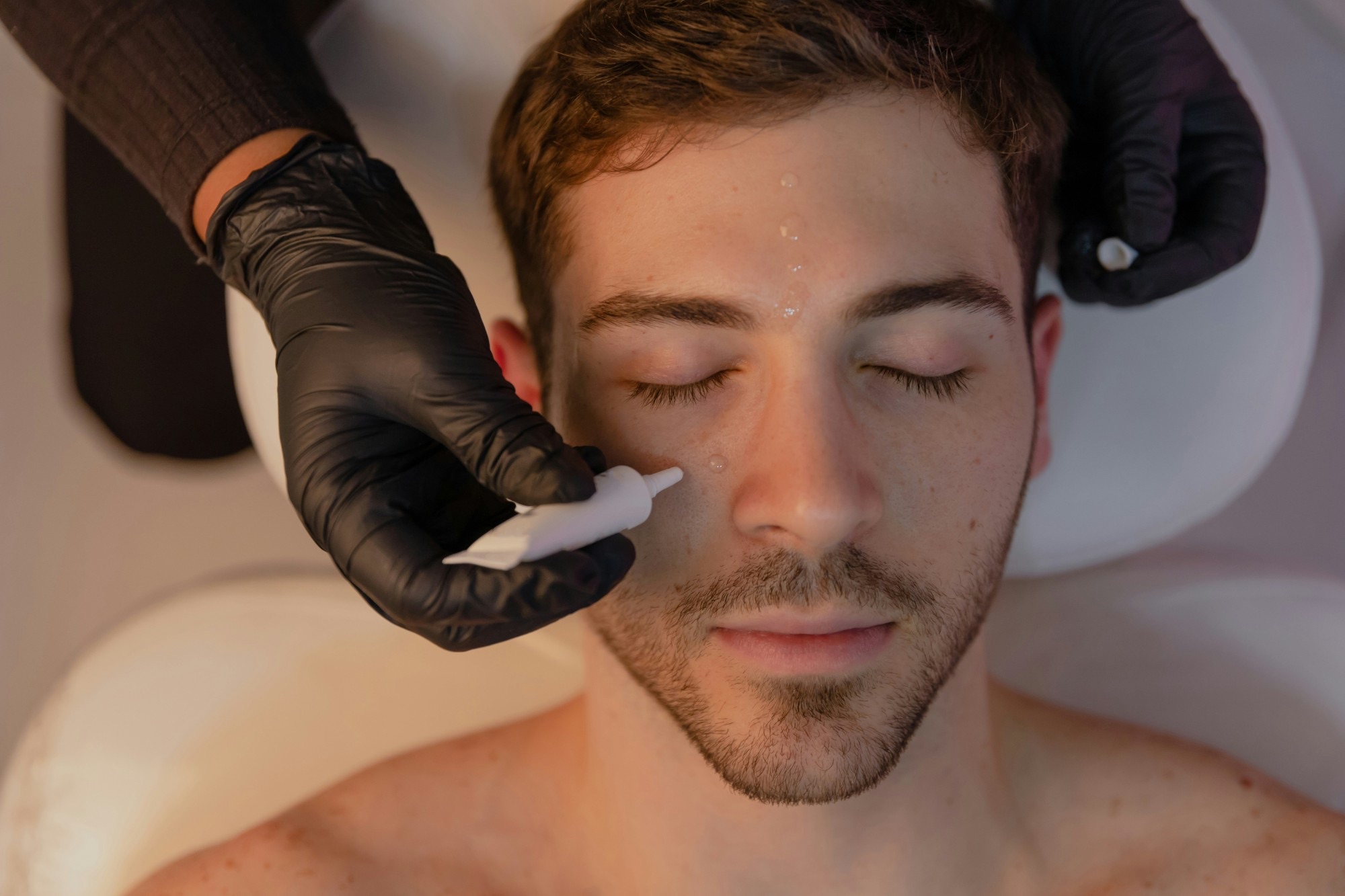
Recovery varies too. A lighter treatment may involve a few days of redness, while more intensive ablative resurfacing can require substantial healing time and careful aftercare. Pigment changes, infection and scarring are among the risks that need discussing before treatment.
I would rather help you choose something that fits your concern and your life than recommend the strongest treatment available.
Hair loss needs a plan
Hair loss is another area where men can spend a lot of money before getting a proper diagnosis.
The first question is why the hair is thinning. Male pattern hair loss, sudden shedding and patchy hair loss need different assessments. Thinning hair also doesn’t automatically mean you have a hormone deficiency.
Depending on the cause, the discussion may include medical management, supportive procedures or referral for hair transplantation. A long-term plan matters more than booking a procedure because it promises regrowth.
The conversations men rarely have
Intimate concerns deserve the same straightforward approach as anything else. Changes in erections, genital appearance, sweating, discomfort or pain during sex are all reasonable things to bring to a doctor.
Some of these concerns are cosmetic. Others relate to sexual function, pelvic floor health or an underlying medical condition. Establishing that distinction comes before choosing a treatment.
You don’t need to arrive knowing the terminology. Explaining what you’ve noticed and what bothers you is enough.
The P-shot
The P-shot is a name used for penile injections of platelet-rich plasma, or PRP, prepared from a person’s own blood. It is marketed for erectile function, sensation and sexual performance.
It’s something men ask about, but the evidence needs to be explained honestly. PRP for erectile dysfunction remains experimental and should not be presented as a proven way to improve erections, increase penis size or enhance sexual performance.1,2 Specialist guidance recommends its use within research settings.3
If erections have changed, I would start with a medical assessment and a discussion of established options. A treatment name shouldn’t replace finding out what is happening.
Scrotal rejuvenation
“Scrotal rejuvenation” is a broad marketing term, rather than one specific procedure. Men may use it when asking about scrotal appearance, skin laxity, sweating or tightness.
These are different concerns and don’t necessarily have the same solution. Normal variation also needs to be distinguished from a new symptom that requires examination.
Some cosmetic scrotal procedures have very limited evidence. In particular, the long-term reproductive safety of scrotal muscle-relaxing injections has not been established in humans. Fertility plans and the uncertainty around outcomes need to be part of the discussion.
Anal relaxation and comfort
Men may also ask about “anal relaxation”, particularly when they experience tightness or pain during receptive anal sex.
That deserves a respectful medical conversation. Pain can relate to a fissure, pelvic floor tension, infection or another condition, and the treatment depends on the cause. Assessment may lead to advice, pelvic floor physiotherapy or referral to a colorectal specialist.
Treatments that relax the anal sphincter have a recognised role in selected conditions such as chronic anal fissures.4 That is different from routinely offering relaxation for sexual enhancement. Possible risks include temporary difficulty controlling wind or stool.4
You shouldn’t feel you have to tolerate pain, but you also shouldn’t be offered a procedure before the cause is understood.
Body concerns and surgical options
Men also seek advice about chest enlargement, loose skin and body contouring. Some concerns can be managed without surgery; others need a surgical assessment.
Chest enlargement is a good example of why examination matters. The concern might involve fatty tissue, glandular tissue or both. A new lump, pain or a change on one side needs medical assessment before it is treated as an aesthetic issue.5
A useful consultation should also explain when a referral is the better option. One clinic doesn’t need to perform every procedure to help you make an informed decision.
A place to ask the question
At CLEON by Dr Brandon in Potts Point, Male by CLEON brings men’s aesthetic and health concerns into a conversation that is often missing from traditional cosmetic care.
You might want to discuss your skin, hair, facial changes or something more personal. The starting point is understanding the concern, what matters to you and whether treatment is appropriate. Some options can be discussed within the clinic; others may require specialist assessment.
There is much more available to men than the usual advertising suggests. You deserve to know what is established, what is still experimental and what may not be worth doing.
There’s no pressure to proceed. My role is to help you understand your options so you can decide.
Book a Male by CLEON consultation →
References
1. Poulios E, Mykoniatis I, Pyrgidis N, et al. Platelet-rich plasma (PRP) improves erectile function: a double-blind, randomized, placebo-controlled clinical trial. J Sex Med. 2021;18(5):926–35. doi:10.1016/j.jsxm.2021.03.008
2. Masterson TA, Molina M, Ledesma B, et al. Platelet-rich plasma for the treatment of erectile dysfunction: a prospective, randomized, double-blind, placebo-controlled clinical trial. J Urol. 2023;210(1):154–61. doi:10.1097/JU.0000000000003481
3. European Association of Urology. EAU Guidelines on Sexual and Reproductive Health: summary of changes, 2022 ("Do not use platelet-rich plasma to treat ED outside the confines of a clinical trial"). uroweb.org Accessed 27 October 2026.
4. Davids JS, Hawkins AT, Bhama AR, et al. The American Society of Colon and Rectal Surgeons clinical practice guidelines for the management of anal fissures. Dis Colon Rectum. 2023;66(2):190–9. doi:10.1097/DCR.0000000000002664
5. Kanakis GA, Nordkap L, Bang AK, et al. EAA clinical practice guidelines: gynecomastia evaluation and management. Andrology. 2019;7(6):778–93. doi:10.1111/andr.12636

Written by Dr Brandon Kober-Brown MBBS, ProfDipMensHlth, GCCM
Registered Medical Practitioner (General Registration) MED0002581903
Disclaimer: This article provides general information and is not personal medical advice. Mention of a treatment does not mean it is suitable for you or available at CLEON. All procedures carry risks, and some treatments discussed remain experimental. Individual assessment is required.
