

Alma Harmony · Potts Point, Sydney
IPL Photofacial & Vascular Laser in Sydney
Brown spots, redness and capillaries. Light chosen for the target.
The Alma Harmony carries two kinds of light, each absorbed by a different target in the skin. Intense pulsed light (IPL) treats the brown and the red of sun damage together: sun spots, freckling, blotchy tone and background redness. A fine green laser, the VascuPen, traces broken capillaries and small red spots one by one. At Cleon, a doctor-led clinic in Potts Point, our dermal therapist assesses your skin and checks every spot before it’s treated. The light is chosen for your skin. Not run from a menu.
- Appointment
- 15–45 min
- Downtime
- Little to none
- IPL course
- 3–6 sessions
- Capillaries
- 1–3 sessions
- IPL face, per session
- $350
Alma Harmony · ARTG listed · ARTG ID 472429 · Class IIb medical device
How it works
How do IPL and vascular laser work on the skin?
Every target in the skin absorbs its own range of light. Pigment absorbs one range, blood another. Choose the right light and pulse, and the target heats while the skin around it is spared. The Harmony gives us two ways to do that: a cooled, filtered IPL for wider areas of brown and red, and a fine green laser for single vessels.
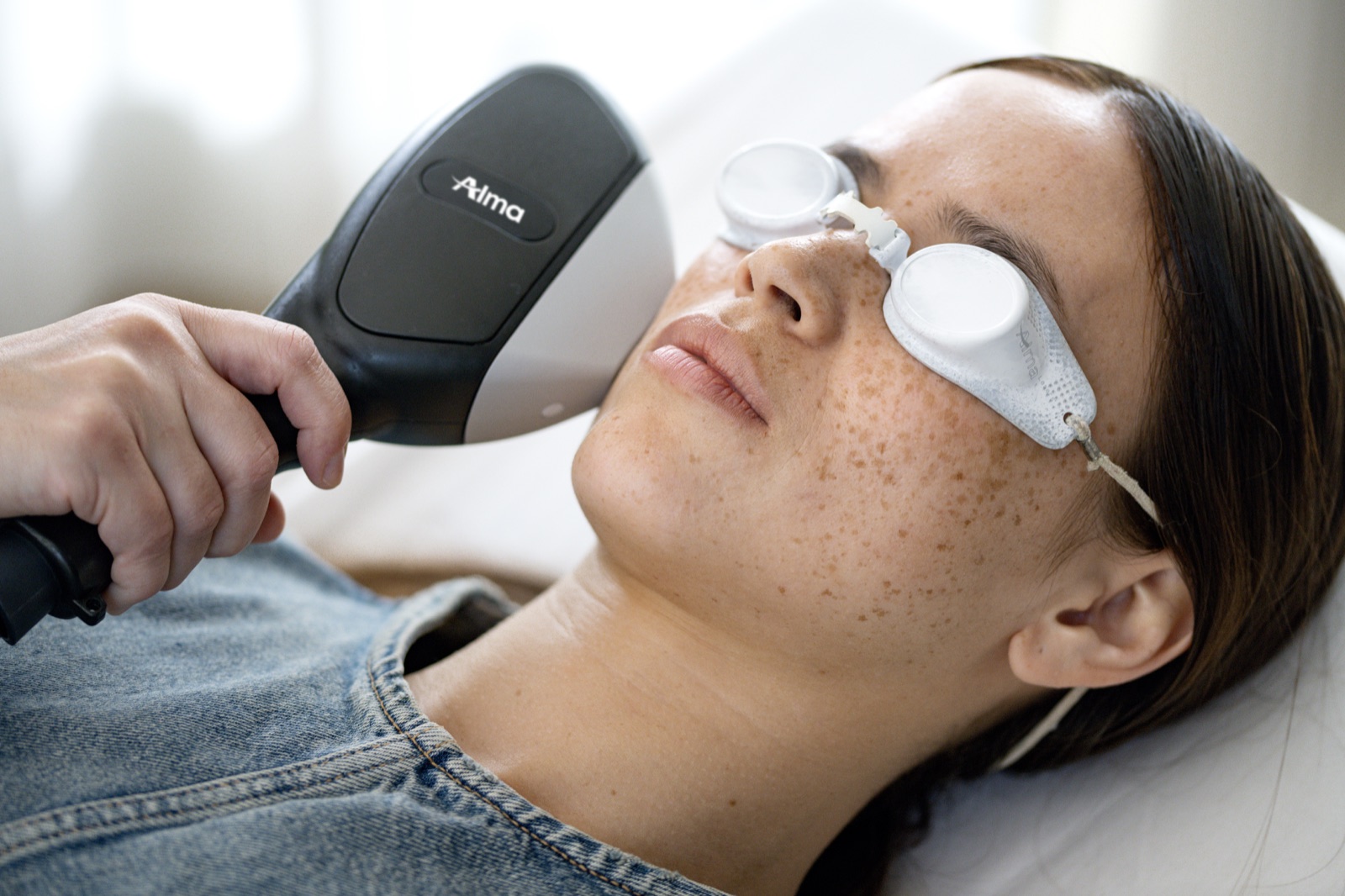
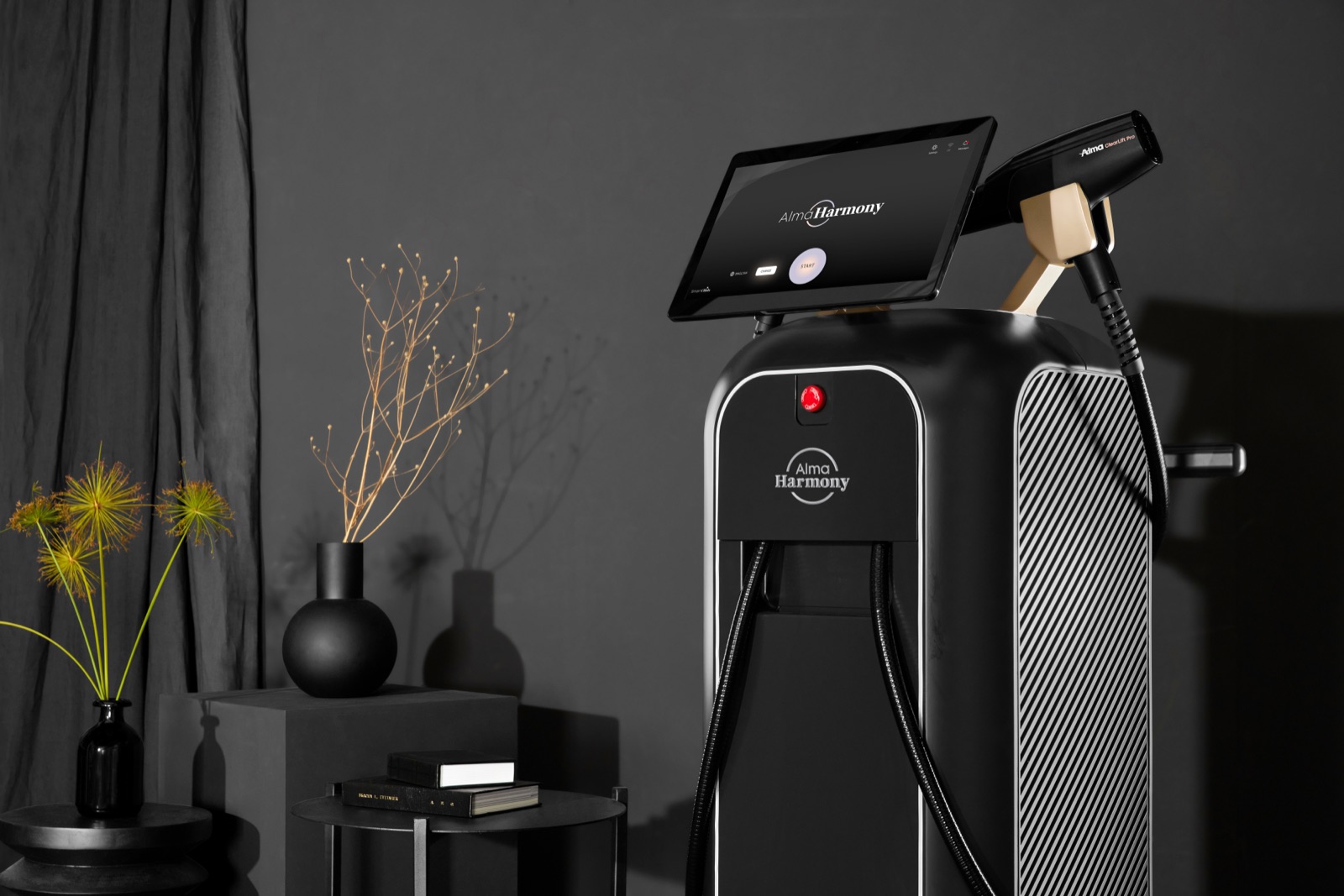
The Alma Harmony is a laser and IPL platform made by Alma Lasers. At Cleon, a doctor-led clinic in Potts Point, Sydney, it’s set up with two applicators. The Iris Dye-VL is a cooled intense pulsed light (IPL) applicator, filtered to 500 to 600 nm, a band that both pigment and blood absorb. It treats sun spots, freckling, blotchy tone and background redness on the face, neck, chest and hands. The VascuPen is a 520 nm green diode laser with tips as fine as half a millimetre, for broken capillaries and small red spots. IPL on the face is often called a photofacial or photorejuvenation. Sessions take 15 to 45 minutes with little or no downtime. IPL is usually a course of three to six sessions, two to three weeks apart. Capillaries usually take one to three sessions, six to eight weeks apart. Our dermal therapist assesses your skin and checks every spot before it’s treated, and anything uncertain is seen by a doctor first. IPL is $350 a session for the face, $500 for the face and neck, and $850 for the face, neck and décolletage. A pack of three is $1,000, $1,300 or $2,000, with LED light therapy included at each session. A consultation is $100.
-
Brown spots & sun damage
Dye-VL IPL · 500–600 nm
Melanin, the pigment in sun spots and freckles, absorbs the Dye-VL’s light, filtered to the green and yellow band. Treated spots darken for a day or two, then flake away over about a week. The skin around them is cooled and largely spared.
-
Redness & fine vessels
Dye-VL IPL · 500–600 nm
Blood absorbs the same band. Passed over the whole area, IPL warms the fine vessels behind background redness and flushing until they close, and the body clears them over the following weeks. Brown and red are treated in the same session.
-
Capillaries & red spots
VascuPen · 520 nm
The VascuPen is a green laser with tips from half a millimetre to two millimetres wide, fine enough to trace one vessel without treating the skin beside it. The vessel changes colour at once, then clears over the following weeks. Leg veins need a deeper-reaching laser, so we refer those on.
What it treats
What can IPL and the VascuPen treat?
Colour in the skin: the brown and the red. IPL has good evidence across sun damage, pigment and visible vessels.1 For deep lines, crepey skin and scarring, resurfacing on the Alma Hybrid usually does more.
Sun spots & freckles
Flat brown spots and freckling on the face, from years of sun. IPL lightens or clears them over a course, and each one is checked before it’s treated.
Sun-damaged chest, neck & hands
Blotchy brown and red on the chest, the sides of the neck and the backs of the hands, where sun damage shows most. IPL treats the brown and the red in the same sessions.
Blotchy, uneven tone
Skin that looks patchy rather than spotted: mottled brown, a ruddy cast, fine vessels showing through. A photofacial course evens the colour. It doesn’t treat wrinkles or sagging.
Redness & rosacea
Background redness and flushing. IPL can reduce the redness and the visible vessels. It manages rosacea rather than curing it, so a skin and trigger plan comes with it.
Broken capillaries
Fine red lines around the nose, cheeks and chin. The VascuPen’s green laser traces them one by one, usually over one to three sessions.
Cherry spots & spider naevi
Small bright red spots on the face, chest and body, and the red dots with fine legs called spider naevi. Each is treated on its own with the green laser.
IPL isn’t the tool for melasma. Light and heat can make melasma darker, so we treat it with peels and prescribed skincare instead. It suits fair to olive skin, not deeper skin tones. It doesn’t remove hair or tattoos, lift or tighten skin, or treat active acne. Leg veins need a different laser, and we’ll refer you.
Is this right for me?
Am I suited to IPL or vascular laser?
This might suit you if
- You have sun spots, freckling or sun damage on the face, chest or hands
- Redness, broken capillaries or small red spots bother you
- Your skin is fair to olive, and isn’t tanned
- You can plan a course of sessions, stay out of the sun between them and wear SPF every day
Worth discussing in consultation first
- You have a tan or fake tan, or you’ve had a lot of sun in the last four weeks
- Your skin is darker, or your pigmentation is melasma. Light can leave both darker, so we’ll usually recommend something else
- You’re pregnant, take medicines that make skin sensitive to light, have taken isotretinoin (Roaccutane) recently, or have seizures triggered by light
- A mole or spot has changed, bled or appeared recently. It needs a skin check with a doctor first. We don’t treat anything that hasn’t been assessed
The device
Why the Alma Harmony?
IPL and a vascular laser are usually separate machines. The Alma Harmony carries both on one platform, from the same maker as our Alma Hybrid.
- The right tool for the target. IPL for wider areas of brown and red, and the 520 nm green laser for single vessels and red spots.
- Cooled, filtered light. The IPL applicator is cooled, and filtered to the band that pigment and blood absorb, so less unneeded light reaches the skin.
- Comfort, by design. The IPL can glide over the skin and build heat gradually, rather than firing single hard pulses.
- Brown and red, one plan. Sun spots and redness are treated in the same IPL session, with the green laser for the vessels IPL leaves behind.
Cleon is a doctor-led clinic. Our dermal therapist assesses your skin, makes the plan and performs your treatment, and every plan is overseen by a doctor. Every spot is checked before it’s treated, and anything uncertain is seen by a doctor first. Our founder, Dr Brandon Kober-Brown, has completed the Laser Safety Officer course and examination. Results are monitored, not assumed.
Results
Before & After
Supplied by Alma, from clinics using the Alma Harmony. These are not Cleon patients. Each shows the light used and the number of sessions.
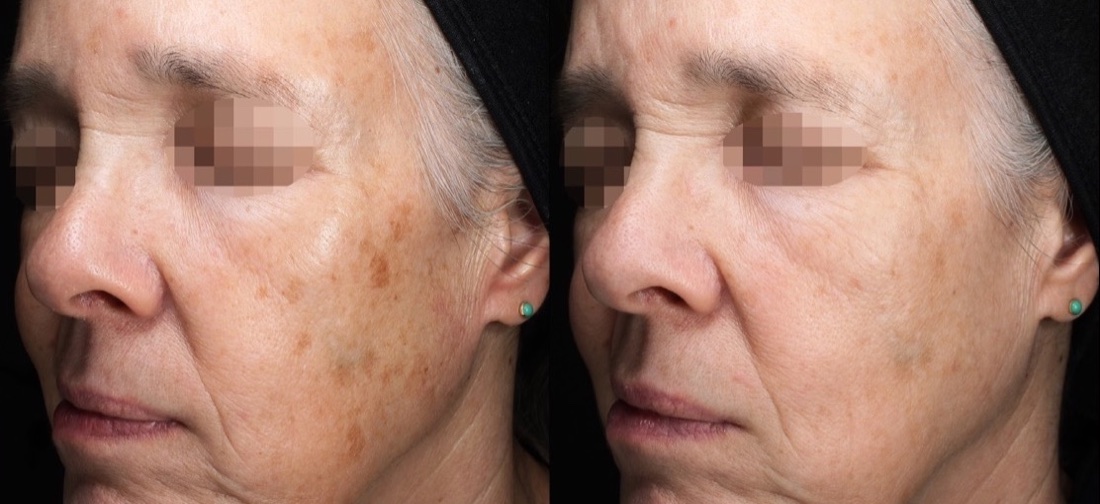
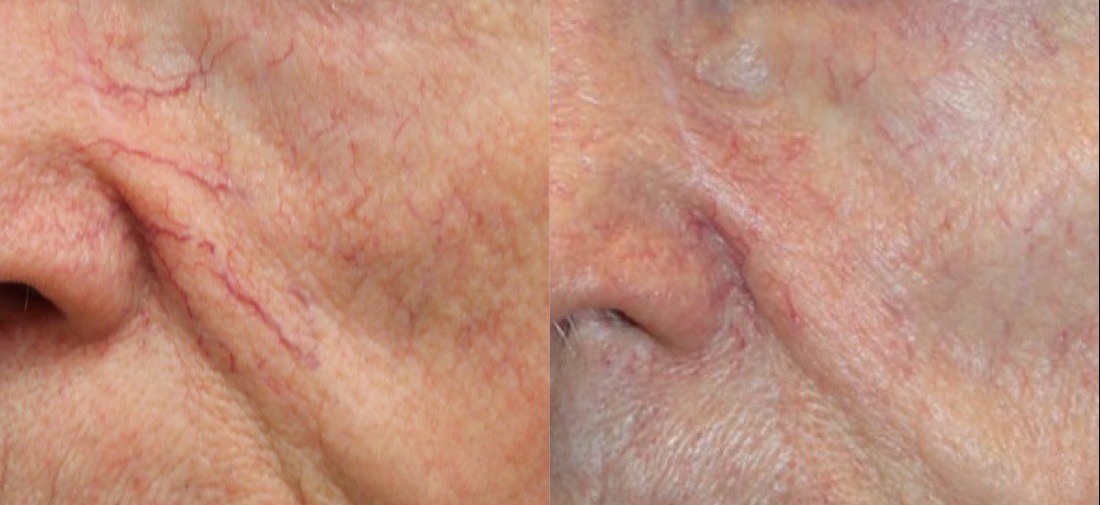
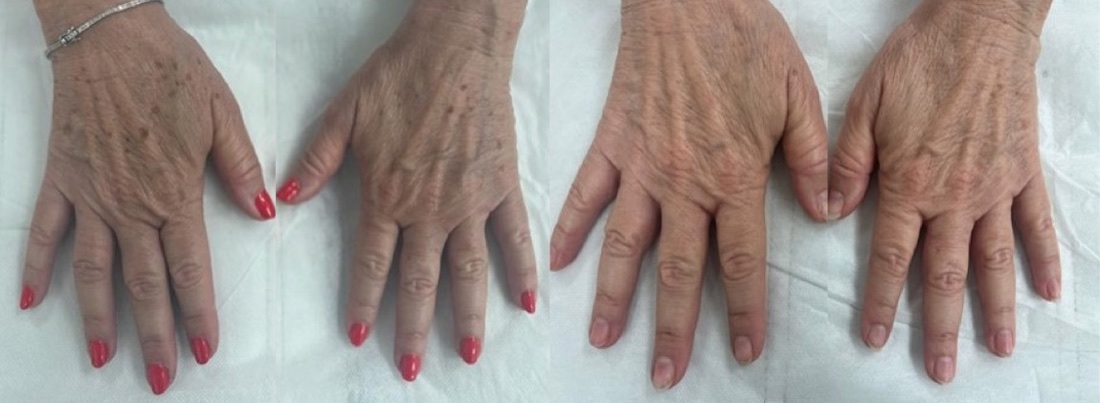
Results vary between individuals, and depend on your skin, the concern and the number of sessions. Images have not been altered by Cleon. What’s realistic for your skin is a conversation for your consultation.
Pricing
How much does IPL cost in Sydney?
IPL is $350 a session for the face, $500 for the face and neck, and $850 for the face, neck and décolletage. A pack of three is $1,000, $1,300 or $2,000, with LED light therapy included at each session. VascuPen treatment for capillaries and red spots is priced at your consultation, because it depends on how many there are to treat. A consultation is $100. If treatment is performed on the day, it comes off your treatment.
What to expect
How does a course of IPL work?
Most concerns need a course: a few sessions, spaced weeks apart, so the skin can clear what each one treats. Downtime is usually little to none. Here’s how it runs, from consultation to result.
-
Consultation & skin check
Our dermal therapist looks at your skin, your history and your goals, checks every spot, and makes the plan: which light, which areas, how many sessions. Anything uncertain is seen by a doctor first.
-
Test patch
A small test area comes first, and it’s checked before your first full session. On olive skin that can mean waiting a day or two.
-
Treatment day
Arrive make-up free, with no tan. Eye shields go on. You’ll feel warmth and quick snaps, like a rubber band flick, with cooling to keep it comfortable. About 15 to 45 minutes.
-
Afterwards
Pink, warm skin for a few hours. Brown spots darken, then flake off over about a week. Treated vessels can look darker for a few days. Make-up usually from the next day.
-
Your course
IPL sessions are two to three weeks apart. Capillaries are treated six to eight weeks apart. Each session builds on the last.
-
Keeping it
Sun brings spots and redness back. Daily SPF 50+ and an occasional maintenance session keep the result.
Sessions and downtime, by concern
| Concern | Usual course | Spacing | Afterwards |
|---|---|---|---|
| Sun spots & sun damage | 3 to 6 IPL sessions | 2 to 3 weeks | Spots darken, then flake off over about a week |
| Redness & rosacea | 3 to 6 IPL sessions | 2 to 3 weeks | Pinkness or mild swelling for a day or two |
| Capillaries & red spots | 1 to 3 VascuPen sessions | 6 to 8 weeks | Treated vessels can look darker for a few days |
Typical ranges from the device’s treatment guidelines. Your plan, and the number of sessions, are made for your skin at your consultation.
How it compares
Alma Harmony or Alma Hybrid: which does what?
Both are Alma platforms, and they do different jobs. The Harmony works on colour in the skin. The Hybrid works on the skin itself.
| Measure | Alma Harmony | Alma Hybrid |
|---|---|---|
| Works by | Light absorbed by a target: pigment or blood | Laser absorbed by water in the skin: resurfacing and collagen |
| Best for | Sun spots, freckling, redness, capillaries, red spots | Texture, fine lines, crepey skin, scars, deeper sun damage |
| The surface | Left intact | Left intact (SoftLift) to resurfaced (CO₂) |
| Typical downtime | None to a week of flaking spots | Hours (SoftLift) to 5 to 14 days (Hybrid Lift) |
| Treatments | IPL photofacial, VascuPen for capillaries | SoftLift, PixelPeel, Hybrid Lift |
Many plans use both: IPL first to clear spots and redness, then the Hybrid for texture and collagen. More on SoftLift, PixelPeel and the Alma Hybrid laser.
Frequently asked
IPL and vascular laser in Sydney: your questions
Anything else, email hello@cleonclinic.com or call 0438 163 638.
What is the Alma Harmony?
The Alma Harmony is a laser and IPL platform made by Alma Lasers. It takes different applicators, each suited to a different target in the skin. At Cleon it’s set up with two: the Iris Dye-VL, an intense pulsed light (IPL) applicator for sun spots, sun damage and redness, and the VascuPen, a 520 nm green laser for broken capillaries and small red spots.
Is the Alma Harmony the same as the Harmony XL Pro?
No. The Harmony XL Pro is Alma’s earlier platform, and many Sydney clinics still run it. The Alma Harmony is the newer generation, with updated applicators and software. The treatments are the same family: Dye-VL IPL and a vascular laser. What matters more than the model is the assessment, the settings and who holds the applicator.
What is IPL, and is it a laser?
IPL stands for intense pulsed light. It isn’t a laser. A laser gives out one exact wavelength; IPL gives out a broad band of light, filtered to suit the concern. Both work the same way: the target absorbs the light and heats, while the skin around it is largely spared. Comparative studies suggest IPL works about as well as lasers for several concerns, including sun damage, redness and pigment.1
What is an IPL photofacial?
A common name for IPL on the face, also called photorejuvenation. It treats the brown and red of sun damage together: sun spots, freckling, blotchiness and fine visible vessels. Skin looks clearer and more even over a course of sessions. It doesn’t treat wrinkles or sagging.
What is the VascuPen?
A small green laser, 520 nm, made for single vessels. Its tips are half a millimetre to two millimetres wide, so it can trace one broken capillary or treat one red spot without treating the skin around it. It’s used for the fine red lines around the nose and cheeks, cherry spots and spider naevi. One to three sessions is usual, six to eight weeks apart.
Does IPL hurt?
Most people describe a warm snap, like a rubber band flicking the skin. The IPL applicator is cooled, and it can glide continuously over the skin to build heat gradually. The VascuPen feels like a quick, hot pinprick on each vessel. Numbing cream is rarely needed.
What is the downtime after IPL?
Usually little. Skin is pink and warm for a few hours. Brown spots darken over a day or two, like coffee grounds, then flake off over about a week. Treated vessels can look darker or slightly bruised for a few days. Most people wear make-up and go back to work the next day.
How many sessions will I need?
It depends on the concern. Sun spots, sun damage and redness usually take three to six IPL sessions, two to three weeks apart. Broken capillaries and red spots usually take one to three sessions with the VascuPen, six to eight weeks apart. The plan is made at your consultation, and we’ll tell you honestly how many to expect.
When will I see results?
Brown spots fade within a couple of weeks of each session. Redness and vessels improve over a few weeks, and the result builds across the course.
How long do IPL results last?
A sun spot that has cleared stays cleared, but the sun makes new ones, so the result lasts as long as your sun protection does. A treated capillary usually stays gone, though new ones can form over time, especially with sun, alcohol, heat and rosacea. Most people keep the result with daily SPF 50+ and a maintenance session once or twice a year.
Can IPL remove freckles and sun spots? Will they come back?
IPL can lighten or clear freckles and sun spots over a few sessions. Sun brings new ones, and darkens the old. Daily SPF 50+ and an occasional maintenance session keep the result. Every spot is checked before it’s treated.
What is the best treatment for sun spots on the face?
It depends on the spots and your skin. For scattered sun spots and freckling on fair to olive skin, IPL (a photofacial) is usually the place to start, and it improves redness at the same time. Patchy pigment such as melasma, and deeper skin tones, do better with a chemical peel and prescribed skincare. Every spot is checked first, because a sun spot and an early skin cancer can look alike. The treatment is chosen for you, not from a menu.
IPL or laser for pigmentation: which is better?
Neither is better for everything. IPL is a broad band of light, filtered for pigment and spread over a wide area, so it suits many spots and uneven tone on lighter skin. Pigment lasers fire a single wavelength in very short pulses, so they suit single stubborn spots, deeper pigment and tattoo ink. We use IPL, with chemical peels and prescribed skincare carrying the result between visits. If a pigment laser would serve you better, we’ll say so and refer you.
Can IPL make pigmentation worse?
It can, in the wrong hands or on the wrong skin. Treating tanned skin, using settings too strong for the skin type, or heating melasma can leave darker patches, called post-inflammatory hyperpigmentation. It’s usually temporary, but it can take months to fade. We lower the risk by assessing your skin type, never treating a tan, testing a small area first, and not using IPL on melasma. If a treatment has ever darkened your skin before, tell us.
Can IPL treat melasma?
We don’t use it for melasma. Melasma is driven by hormones, heat and light, and it tends to return. Laser and light can lighten it, but recurrence is common and they can also make it darker.2 At Cleon, melasma is treated without heat: a pigment-balancing chemical peel, prescribed skincare and strict sun protection.
Can IPL help rosacea?
It can reduce the background redness, flushing and visible vessels of rosacea. It manages rosacea rather than curing it, so it works best with the right skincare, prescription treatment where a doctor recommends it, and attention to your triggers. Flares, pimples and very sensitive skin are settled first.
Can broken capillaries on the face be removed?
Most fine red vessels on the nose, cheeks and chin can be treated. The VascuPen’s green laser traces small vessels one by one, and IPL treats the wider redness around them. One to three sessions is common. New vessels can form over time, especially with sun, alcohol and rosacea.
Can red spots (cherry angiomas) be removed?
Usually, yes. Cherry spots are small, bright red clusters of blood vessels that become more common with age. They’re harmless, and the green laser treats them one at a time, usually over one to three sessions. Anything that has changed, bled or looks unusual is seen by a doctor first.
Can IPL fade red marks left by acne?
Often, yes. Flat red or purple marks after breakouts are small, widened vessels, so IPL can target them. Brown marks are pigment, and usually do better with a peel and skincare. Pitted or indented scars are a different problem, and need skin needling or resurfacing. We don’t use IPL for active acne.
Can IPL or the VascuPen treat leg veins?
No. Veins on the legs are larger and sit deeper than facial capillaries, and need a different treatment. We’ll refer you to someone who treats them.
Is this IPL hair removal?
No. IPL for hair uses a different applicator and a different band of light. Ours is filtered for pigment and blood vessels, not hair, and we don’t offer IPL or laser hair removal.
Is IPL safe for darker skin tones?
IPL suits fair to olive skin best. The pigment in darker skin competes for the light, which raises the risk of burns and patchy pigment. The device’s guidelines cover Fitzpatrick skin types I to IV, with a test area read a day or two later for type IV. For deeper skin tones we don’t use IPL, and we’ll recommend something that doesn’t rely on light, such as a chemical peel or skin needling. Your skin type is assessed before any plan is made.
Can IPL be used around the eyes?
Around them, yes. On the eyelids, no. The skin over the cheekbones and temples can be treated, and you wear protective eye shields for the whole session. Light is never fired at the eyelid itself.
Is IPL safe? What are the side effects?
It’s a medical device, so it carries risks, and they’re discussed before anything happens. The common effects are mild: redness, warmth, slight swelling, and darkening of treated spots for a few days. Less common are blistering and temporary lightening or darkening of the skin, especially after recent sun or in darker skin. Scarring is rare. Your history is screened, a small area is tested first, settings are chosen for your skin, and eye protection is worn throughout.
Can I have IPL in summer?
Yes, if your skin isn’t tanned, but sun spots and pigment are easiest to treat between autumn and spring. Tanned or recently sunburnt skin absorbs more light, which raises the risk of burns and patchy pigment. Avoid tanning, sunburn and fake tan for about four weeks before and between sessions, and wear SPF 50+ every day.
How do I prepare for IPL?
Come make-up free, with no tan, fake tan or sunburn for about four weeks. Tell us about any medicines, especially those that make skin sensitive to light, recent isotretinoin and any history of cold sores. You’ll get a full plan at your consultation.
What should I avoid after IPL?
Sun and tanning for about four weeks, with SPF 50+ every day. For the first day or two, skip hot showers, saunas, hard exercise and anything that makes you flush. Don’t pick at darkened spots; let them flake off on their own. Pause active skincare, such as retinoids and acids, for a few days, and keep the skin cool and moisturised. Make-up is usually fine from the next day. You’ll get written aftercare at your session.
Who shouldn’t have IPL?
It isn’t used during pregnancy, on tanned skin, on deeper skin tones, or where there’s an active infection, a cold sore or an unassessed spot in the area. Recent isotretinoin, light-sensitising medicines, seizures triggered by light, a history of keloid scarring and some other conditions need care or rule it out. Your medical history is reviewed before any treatment.
Why is every spot checked before it’s treated?
Because a brown spot isn’t always a sun spot. Light can lighten the colour of a skin cancer without removing it, which hides it rather than treats it. Every pigmented spot is assessed before treatment, and anything uncertain is seen by a doctor or referred for a skin check first. We don’t treat a spot that hasn’t been assessed.
What’s the difference between the Alma Harmony and the Alma Hybrid?
The Harmony targets colour in the skin: pigment and blood vessels. The Alma Hybrid works on the skin itself, resurfacing with CO2 and building collagen with its 1570 nm laser, for texture, lines and scars. Many plans use both.
Should I have IPL or a chemical peel for pigmentation?
They work differently, and the pigment decides. Light targets the pigment itself, so distinct sun spots and freckles usually respond well to IPL. A chemical peel renews the surface, so it suits patchy, superficial pigment, dullness and melasma, where heat is a risk. Many people do both, in an order chosen for their skin, with prescribed skincare in between.
Can IPL be combined with other treatments?
Often. IPL first, to clear spots and redness, then SoftLift or PixelPeel on the Alma Hybrid for texture and collagen, is a common sequence. LED light therapy can calm the skin on the day or between sessions, skin needling treats the scars that light can’t, and prescribed skincare sits under all of it. Added on the same day as IPL, an LED session is $60 instead of $120, and it’s included at each session in a pack of three. What belongs together, and in what order, depends on your skin.
Is IPL the same as BBL?
They’re the same family of technology: filtered, pulsed light that targets pigment and vessels. Brands differ in their filters, cooling and applicators. What matters more is the assessment, the settings and the person holding the applicator.
Is IPL suitable for men?
Yes. Sun damage, redness and broken capillaries are common reasons men come in. Men’s treatments are also offered through Male by Cleon.
Does Medicare cover IPL?
No. Cosmetic IPL and laser treatments have no Medicare rebate, and private health insurance doesn’t cover them.
How much does IPL cost in Sydney?
IPL is $350 a session for the face, $500 for the face and neck, and $850 for the face, neck and décolletage. A pack of three is $1,000, $1,300 or $2,000, with LED light therapy included at each session. VascuPen treatment for capillaries and red spots is priced at your consultation, because it depends on how many there are to treat. A consultation is $100, and if treatment is performed on the day, it comes off your treatment. There’s no Medicare rebate.
Is there an IPL clinic near me in Sydney?
Cleon by Dr Brandon is at Ground 02, 46a Macleay Street, Potts Point, a short walk from Kings Cross station. It’s close to Elizabeth Bay, Rushcutters Bay, Darlinghurst, Woolloomooloo and the CBD, and easy to reach from the Eastern Suburbs.
Who performs IPL and VascuPen treatments?
Our dermal therapist assesses your skin, makes the plan and performs the treatment. Cleon is a doctor-led clinic: every plan is overseen by a doctor, and any spot that looks uncertain is seen by a doctor before it’s treated.
Book a consultation
The conversation comes first.
Face to face at our Potts Point clinic, a short walk from Kings Cross station. We’ll tell you honestly whether light is the right answer for your skin, and which kind. No treatment agenda.
The evidence
References
Independent reviews behind the clinical claims on this page. Last reviewed November 2026.
- 1Babilas P, Schreml S, Szeimies RM, Landthaler M. Intense pulsed light (IPL): a review. Lasers Surg Med. 2010;42(2):93–104. doi:10.1002/lsm.20877
- 2Trivedi MK, Yang FC, Cho BK. A review of laser and light therapy in melasma. Int J Womens Dermatol. 2017;3(1):11–20. doi:10.1016/j.ijwd.2017.01.004
Alma, Alma Harmony, VascuPen and Iris are trademarks of Alma Lasers. BBL is a trademark of its owner.
