

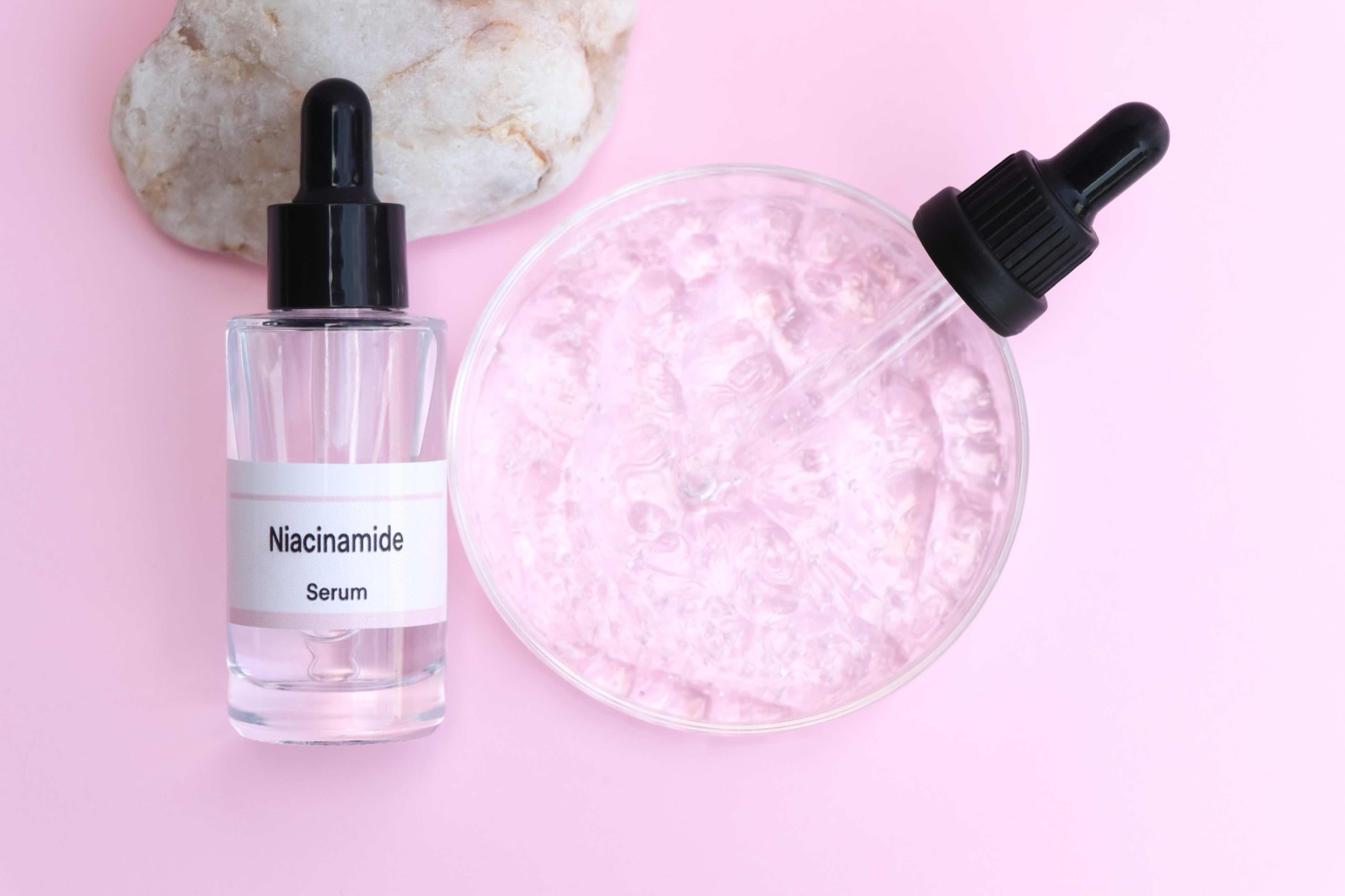
Niacinamide: A Useful All-Rounder for Your Skin
Niacinamide is a form of vitamin B3 found in many serums and moisturisers. It can help the skin retain moisture, improve uneven tone and reduce excess oil in some people. It is generally well tolerated, which makes it a useful option across a range of skin types.1
You may already be using it without realising. Before adding a separate niacinamide serum, check what’s in your moisturiser.
Supporting the skin barrier
Your skin barrier helps keep moisture in and irritants out. Niacinamide supports the production of ceramides and other lipids that help this barrier function properly. This can reduce water loss and improve hydration.2
That makes it useful in a moisturiser, particularly if your skin tends to feel dry or uncomfortable. It can also fit into a routine containing retinoids or exfoliating acids, although it won’t cancel out irritation from using those products too aggressively.
If your skin is persistently sore, red or flaky, I would review what’s causing that before adding another serum. And after a procedure, follow the skincare instructions you’ve been given. A generally well-tolerated ingredient isn’t automatically suitable for freshly treated skin.
Oil, redness and uneven tone
Niacinamide may help reduce facial oiliness. Small clinical trials using a 2% formulation found improvements in some measures of oil production, although the response wasn’t identical across participants.3 It can be a useful addition for oily skin, but I wouldn’t rely on it alone to treat persistent acne.
There is also evidence that it can improve red blotchiness and uneven pigmentation.1 For pigmentation, it works partly by reducing the transfer of pigment packages from pigment-producing cells to surrounding skin cells.4 You don’t need to remember the biology. The practical point is that it may gradually help some dark marks and uneven tone, rather than remove them overnight.
Stronger isn’t necessarily better
Many clinical studies have used concentrations around 2–5%.1 A product containing 10% or more isn’t automatically more effective, and higher strengths may be harder for some people to tolerate.
The whole formula matters, including the other ingredients and how often you use it. Niacinamide is usually comfortable on the skin, but persistent stinging or redness is a reason to stop and reassess.

Where does it fit?
Niacinamide can be used in the morning or evening, following the product directions. If it’s already in a moisturiser that suits you, there may be little reason to add another dedicated product.
I like ingredients that serve a clear purpose without making skincare unnecessarily complicated. Niacinamide can do that. It’s worth considering for barrier support, oiliness or uneven tone, but you don’t need it in every step of your routine.
Products we stock with niacinamide
These are the products in our shop that contain niacinamide. Each one links to its page.
Metacell Renewal B3 → SkinCeuticals · A moisturiser with 5% niacinamide, for early fine lines and uneven tone.
Ultra Nourishing Moisturiser → ALASTIN · A moisturiser with niacinamide and ceramides, for dry skin and the barrier.
A.G.E. Interrupter Ultra Serum → SkinCeuticals · A serum with 4% niacinamide, for firmness and even tone in mature skin.
Discoloration Defense Dark Spot Corrector → SkinCeuticals · Niacinamide with tranexamic and kojic acids, for dark spots.
Restorative Neck Complex → ALASTIN · For the neck and décolletage, with niacinamide for even tone.
References
1. Boo YC. Mechanistic basis and clinical evidence for the applications of nicotinamide (niacinamide) to control skin aging and pigmentation. Antioxidants (Basel). 2021;10(8):1315. doi:10.3390/antiox10081315
2. Tanno O, Ota Y, Kitamura N, et al. Nicotinamide increases biosynthesis of ceramides as well as other stratum corneum lipids to improve the epidermal permeability barrier. Br J Dermatol. 2000;143(3):524–31. doi:10.1111/j.1365-2133.2000.03705.x First author from Kanebo, a cosmetics company.
3. Draelos ZD, Matsubara A, Smiles K. The effect of 2% niacinamide on facial sebum production. J Cosmet Laser Ther. 2006;8(2):96–101. doi:10.1080/14764170600717704
4. Hakozaki T, Minwalla L, Zhuang J, et al. The effect of niacinamide on reducing cutaneous pigmentation and suppression of melanosome transfer. Br J Dermatol. 2002;147(1):20–31. doi:10.1046/j.1365-2133.2002.04834.x First author from Procter & Gamble, which makes skincare.
Written by Dr Brandon Kober-Brown MBBS, ProfDipMensHlth, GCCM
Registered Medical Practitioner (General Registration) MED0002581903
Disclaimer: This article is intended for general educational purposes only and should not be taken as personal medical advice. It is not a substitute for a consultation with a registered medical practitioner. Stop using any product that causes persistent stinging or redness, and seek advice.
